Why Ainan, Ehime, Is Ideal For Sea Bream
Through one species, the red sea bream, we can grasp the evolution of Japan’s fisheries industry: less reliance on luck, more emphasis on proof; less guesswork and more quantified management. It’s this sense of craftsmanship guided by precision technology that makes Ainan sea bream such a delight.
On a crisp January morning in Ehime Prefecture, I board a small fishing boat in Ainan Town and head out toward offshore nets being hauled from the sea. In this area, each pen can contain around 40,000 fish, raised to supply Japan with a delicious source of seafood available year-round.
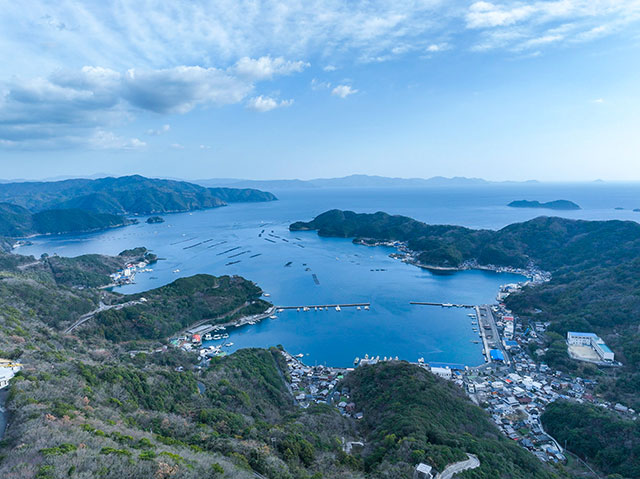
Kura Bay in Ainan Town
Ainan sea bream refers to farm-raised red sea bream (Pagrus major, madai in Japanese) produced off Ainan Town. Producers there aim for stable quality through measured farming and processing.
In Japanese food culture, madai is linked to celebration, and the fish appears at events such as New Year’s and weddings. The flesh keeps its shape when cooked and turns a translucent white, so it works not only as sashimi but also in hot dishes served at home and in restaurants.
What Makes Ainan Sea Bream So Good
- Texture and taste
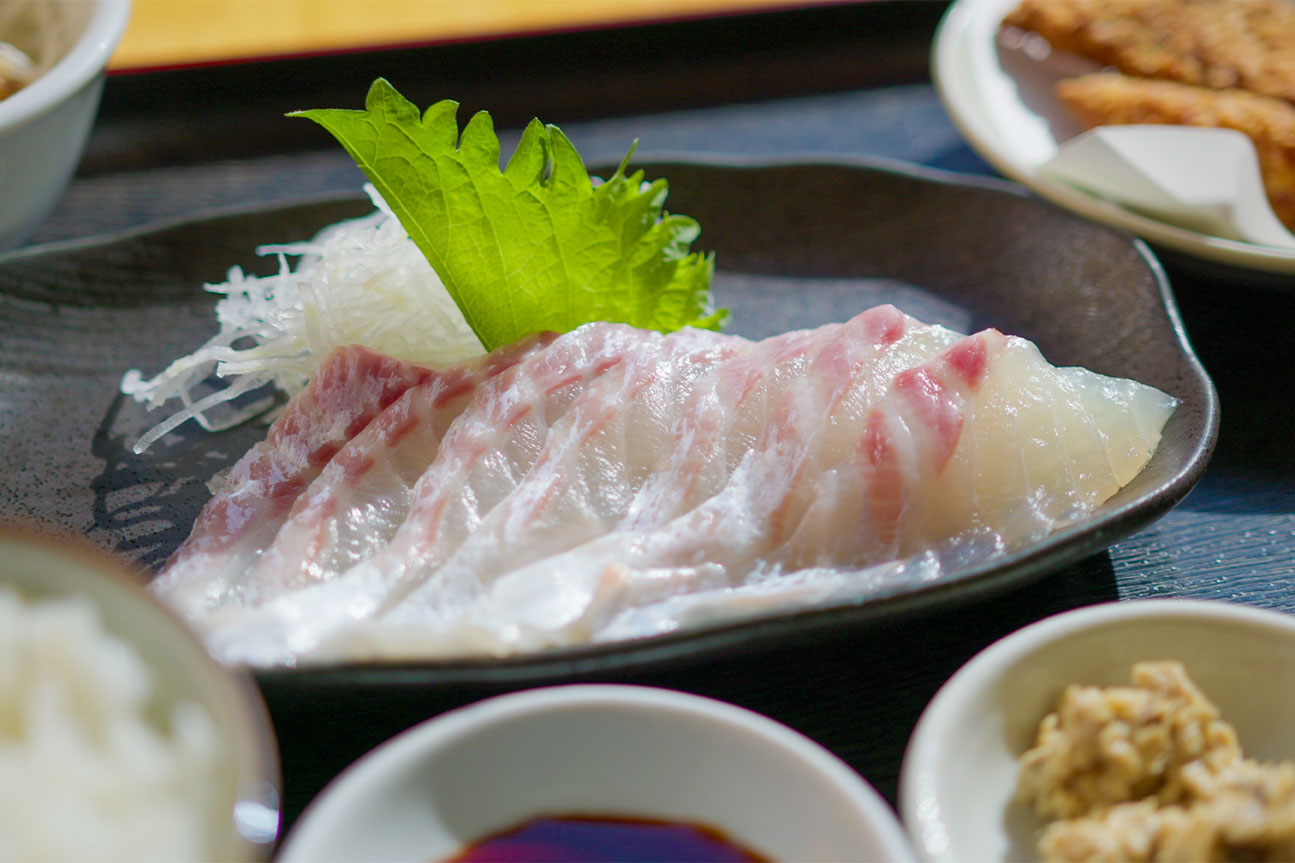
- Okada Takahiro of the Ainan Fisheries Cooperative emphasizes that, unlike wild fish, farmed sea bream can offer stable quality all year round. In the cooperative’s cafeteria, freshly sliced sea bream sashimi has a satisfying, substantial texture.
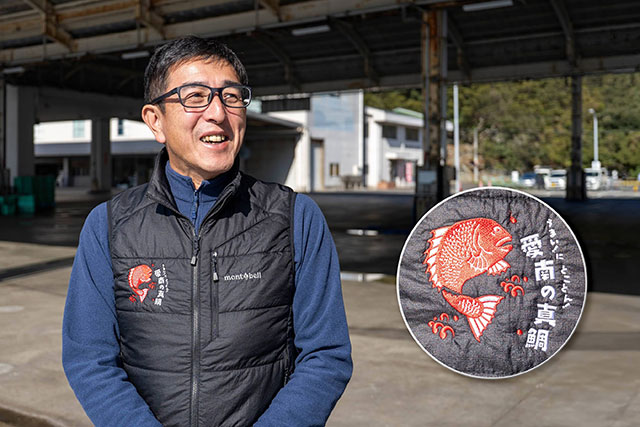
Takahiro Okada of the Ainan Fisheries Cooperative, who is focused on building the Ainan sea bream brand
- Fat content and nutrition (DHA, EPA)
- “Among Japanese people, aquaculture fish had an image of being oily, but with improvements to feed, that isn’t the case with our Ainan sea bream,” says Okada. “They get just the appropriate amount of exercise, resulting in a delicious fish with the right amount of fat, which is rich in Omega3 fatty acids such as DHA and EPA.”
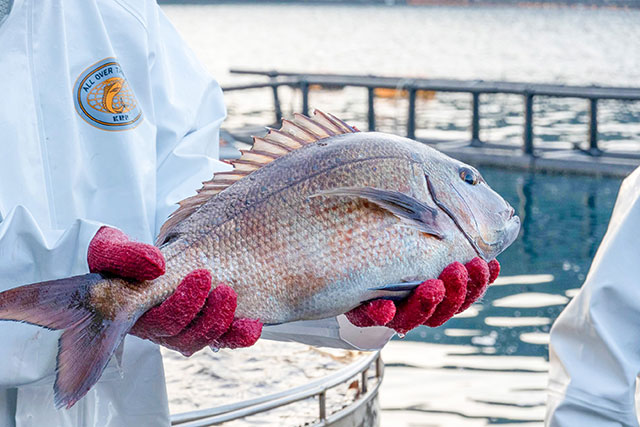
Farm-raised red sea bream from Ainan Town, Ehime Prefecture
Stable water temperature and predictable currents
The cooperative reports that it has about a 20 percent share of Japan’s farmed red sea bream, and ships more than 100 tons a year to the U.S. and Canada, where it says it holds a 20 percent market share of Japanese red sea bream.
Why Ainan Town Is Well-Suited to Farming Red Sea Bream
- The Bungo Channel and the Kuroshio Current
- Ainan Town sits near the southwestern end of Shikoku, facing the Bungo Channel between Shikoku and Kyushu. The coastline has inlets with strong but predictable tides, and the influence of the nutrient-rich Kuroshio Current helps stabilize water quality. Circulation moderates water temperature and supports consistent farming conditions.
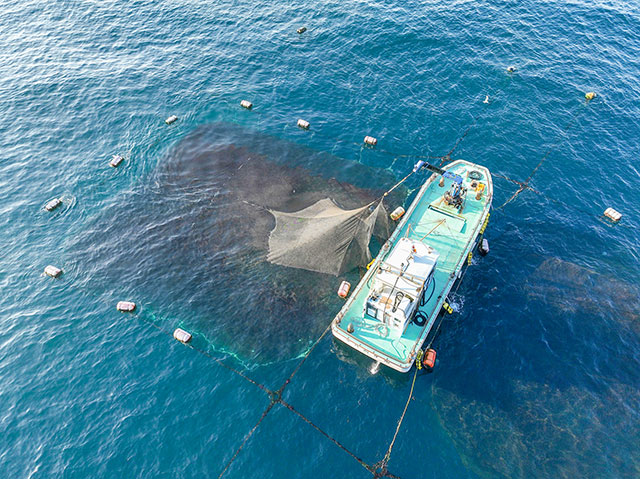
Offshore sea pens for farmed red sea bream, lined up across the bay.
Ainan Sea Bream Aquaculture Technology and Quality Control
- From craft to monitoring technology
- One of the major local producers is Yasutaka Suisan, led by President Takami Yasuoka. He says aquaculture has traditionally relied on intuition and experience, and his response was to make production visible. Yasutaka Suisan operates more than 100 sea pens (netted enclosures in the ocean), and a custom system digitizes feeding records and tracks the production cycle, including milestones such as stocking, vaccination, net replacement, and shipment.
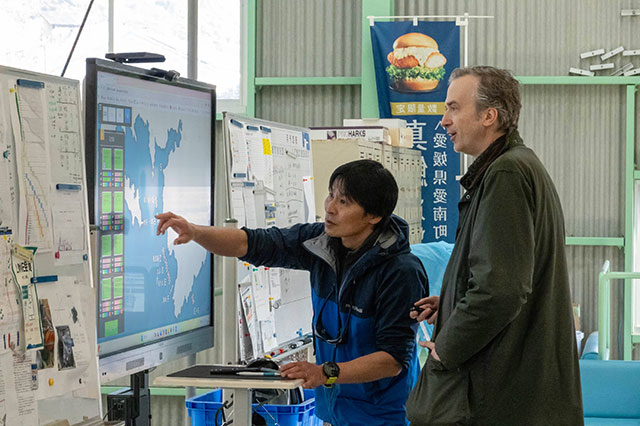
President Takami Yasuoka of Yasutaka Suisan (left). A large monitor brings together everything from real-time footage to production schedules.
Tablets are used on-site, and environmental data such as water temperature readings at 60 meters are referenced from prefectural and university researchers. The entire shipping process is recorded on video so issues can be traced later.
Despite all the tech, much of the work remains physical, cold, and wet. Nets must be set up manually, and juvenile sea bream are vaccinated by hand, one at a time. After two to three years, fish are shipped using an automatic weighing system at the shipping facility’s shipping area which sorts live fish by size; for export, fish are dispatched through ikejime, or spiking the hindbrain. After inspection, fish are packed into slotted boxes for shipment, and the system allows an average of 5,000 sea bream to be shipped at once.
- Traceability and HACCP
- In Ainan Town, quality control is reinforced by cooperative-centered management. Processing facilities comply with HACCP (Hazard Analysis Critical Control Point) standards, and traceability systems track fish beginning with the fry. Fry are shipped from Kindai University, known for aquaculture research.
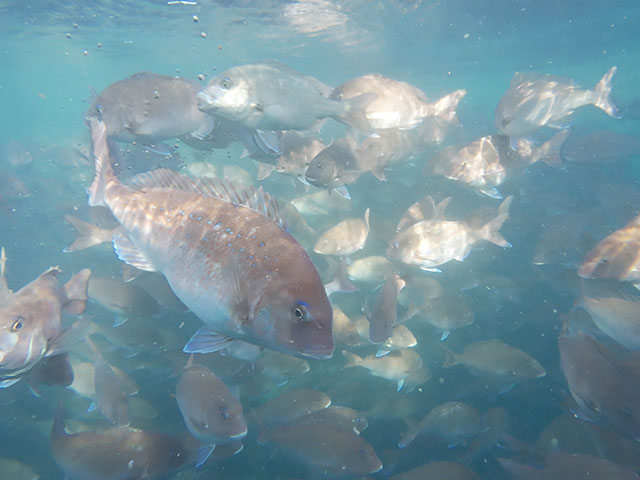
Beneath the surface, mature sea bream are raised inside underwater nets.
- International certifications such as ASC and BAP
- Monitoring continues through shipment, and farms hold third-party certifications such as Marine Eco-Label Japan (MEL), Aquaculture Stewardship Council (ASC) and Best Aquaculture Practices (BAP). Okada adds that many international retailers require certification.
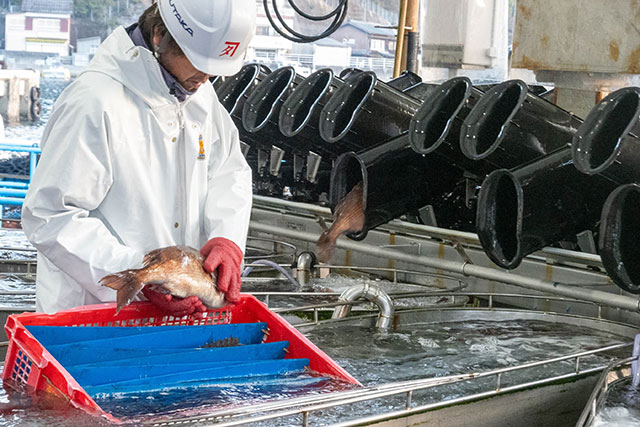
Sea bream, automatically weighed and sorted by size, are carefully packed for shipment.
The Best Dishes For Ainan Sea Bream
- Sashimi and sushi
- In Japan, red sea bream is enjoyed in many forms, including sashimi and sushi, and remains a fish for celebrations.
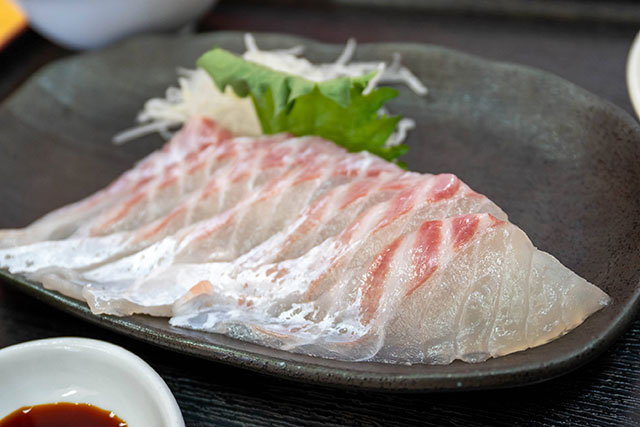
Freshly sliced sea bream sashimi has a satisfying, substantial texture.
- Cooked dishes
- Red sea bream is also enjoyed in cooked dishes, including soups and other everyday preparations.
Precision-guided craftsmanship
When I caught my first sea bream with a rod and line off Kyushu, it was an unforgettable thrill. Not everyone can have that kind of luck, however. By using the results of careful scientific research and precision craftsmanship, farmed sea bream makes this celebrated fish available to all, year-round.
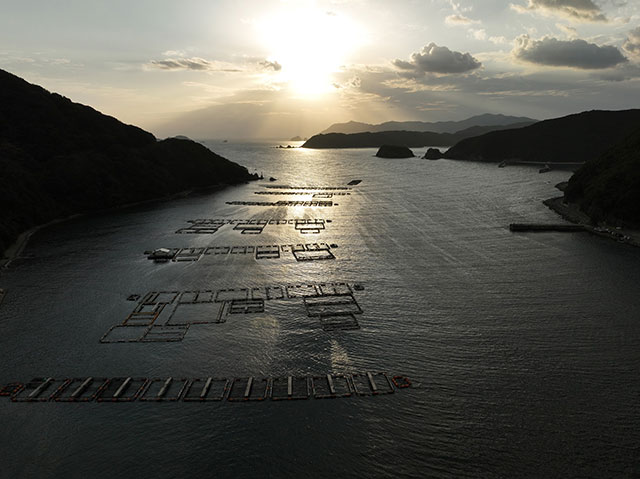
Sea pens close to the harbor, where juvenile fish are raised.
Off the coast of Ainan Town, I saw the pens float quietly against a backdrop of green hills and open water in the Bungo Channel. Looking at the calm surface, I reflected on those hundreds of thousands of sea bream below and all the calculations required to raise and ship them to consumers around the world. These thoughts stayed with me as I tucked into delicious sea bream sashimi in the cafeteria at the Ainan Fisheries Cooperative.
Through one species, the red sea bream, it became possible to understand the evolution of Japan’s fisheries industry: less reliance on luck, more emphasis on proof; less guesswork and more quantified management. It’s this sense of craftsmanship guided by precision technology that makes Ainan sea bream such a delight.