Discovering the Delights of Yamecha with Per Oscar Brekell
With the global boom in matcha tea and matcha-flavored food, there’s been enormous interest in Japanese tea in recent years. But many may be surprised to discover that there are many varieties of tea in Japan, all generally derived from Camellia sinensis . It’s no wonder, then, that newcomers are turning to Per Oscar Brekell, a green tea instructor based in Tokyo, to help them distinguish their bancha —made from tough leaves and late-growing leaves—from their tencha , the tea used to make matcha.
Acquiring the taste
I recently met Brekell to sample and discuss yamecha , a unique, high-quality variety of tea grown in Yame, Fukuoka Prefecture. When I meet Brekell in Tokyo’s Minami-Aoyama, he’s every inch the tea master—decked out in a resplendent navy-blue kimono, he looks like he’s stepped out of the Edo period, or at least an episode of Shōgun . We sit down at Matsubaya Saryo, a quiet tea house where potted bonsai are spotlighted on wooden tables.
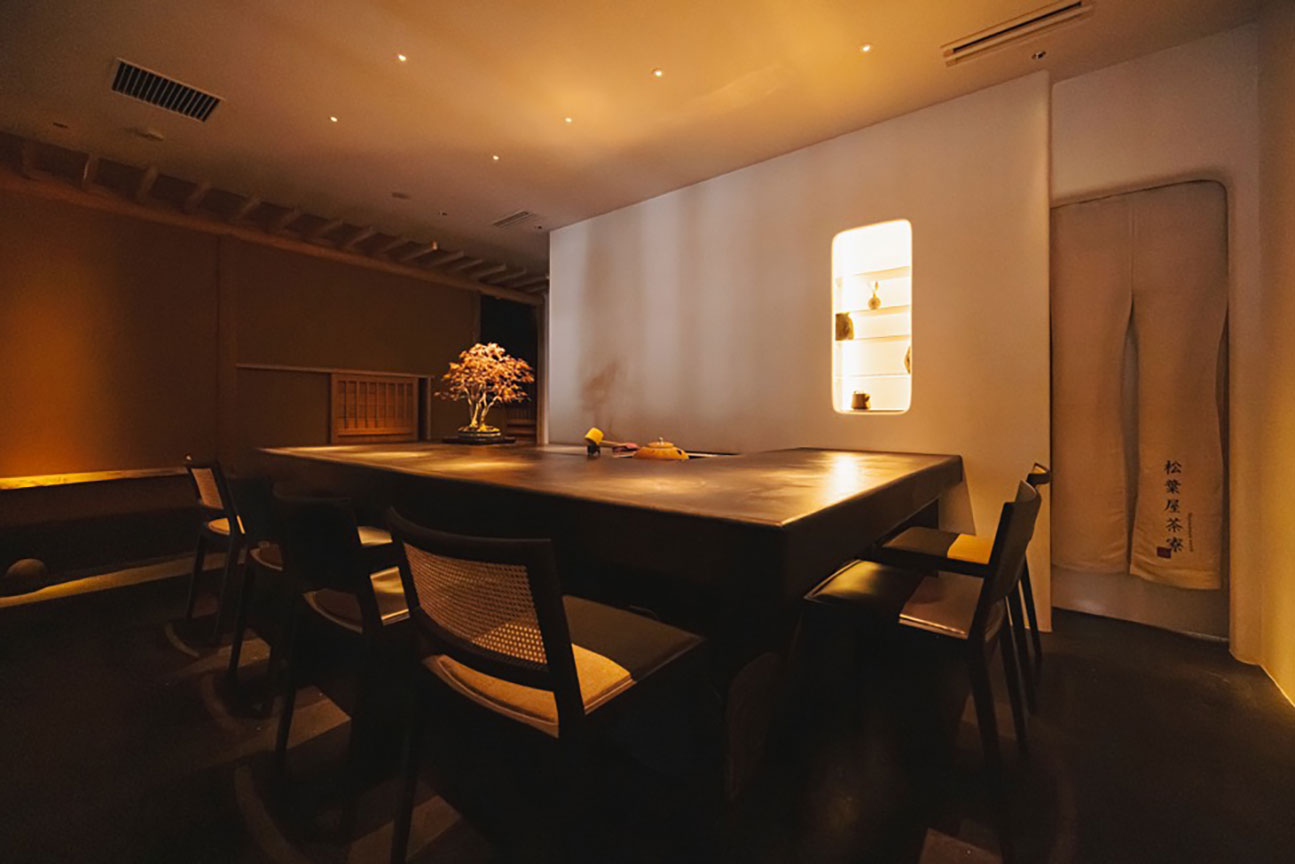
In Tokyo, Matsubaya Saryo offers a quiet, contemplative atmosphere for appreciating Japanese tea.
Brekell fell in love with Japanese tea while he was in high school in his native Sweden. When a Japanese friend visited his home in Malmo and saw all his teas and tea-making equipment, she suggested Brekell become a tea instructor—often confused with a tea ceremony teacher, but more like a sommelier for tea.
“For me, it wasn’t love at first sip. Green tea is more of an acquired taste. At first I didn’t like it all. I was initially interested in tea because it was a way for me to cultivate my interest in Japanese culture. Once I got used to it, it made me feel calmer and more focused.”
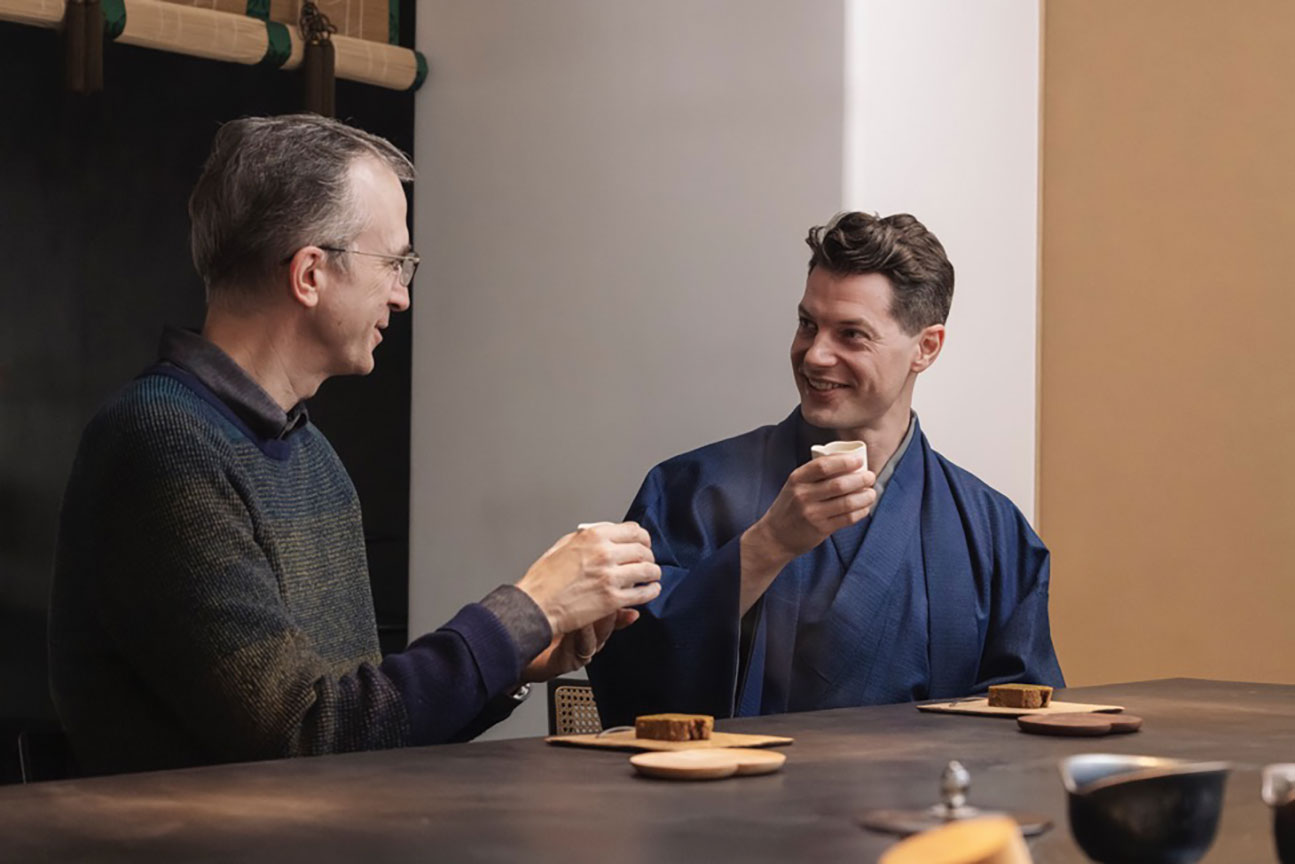
“I was initially interested in tea because it was a way for me to cultivate my interest in Japanese culture,” says Brekell.
Yame’s unique terroir for tea
“Yamecha is really sweet and it is really good for beginners in Japanese tea,” says Brekell. “Yame was the first tea-growing region I visited, so it set a standard. The terrain is characterized by slopes, mists and forests around the tea farms. The natural shade of the terroir makes for a milder tea with less astringency, less bitterness.”
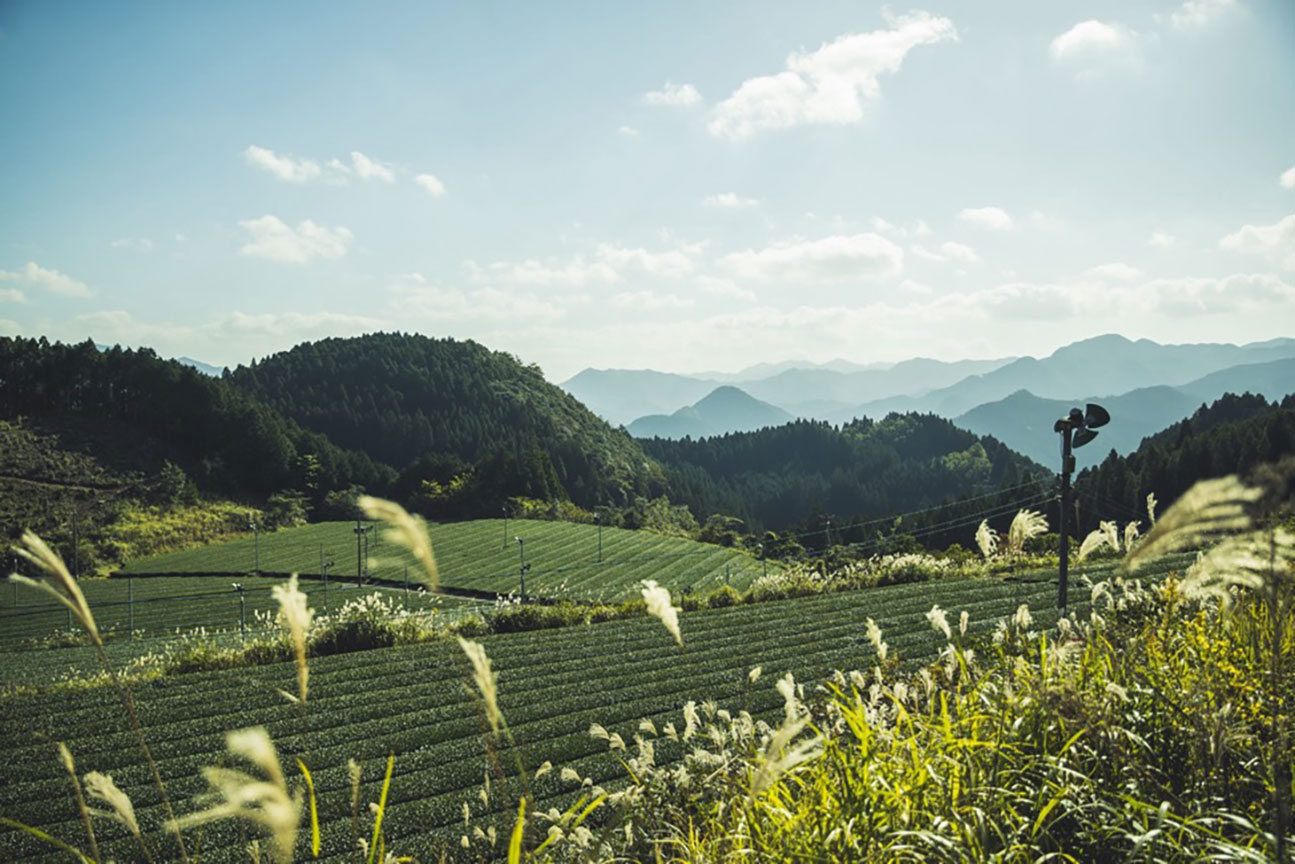
The tea region of Yame, Fukuoka Prefecture, has a misty, mountainous terroir that provides some natural shading for plants. Photo: Fukuoka Prefecture Tea Industry Promotion Council
Sencha is a type of green tea that is the most commonly consumed in Japan. It’s best to first familiarize onself with yamecha in general. Brekell recommends yame sencha because it is easy to try and affordable as an everyday tea.
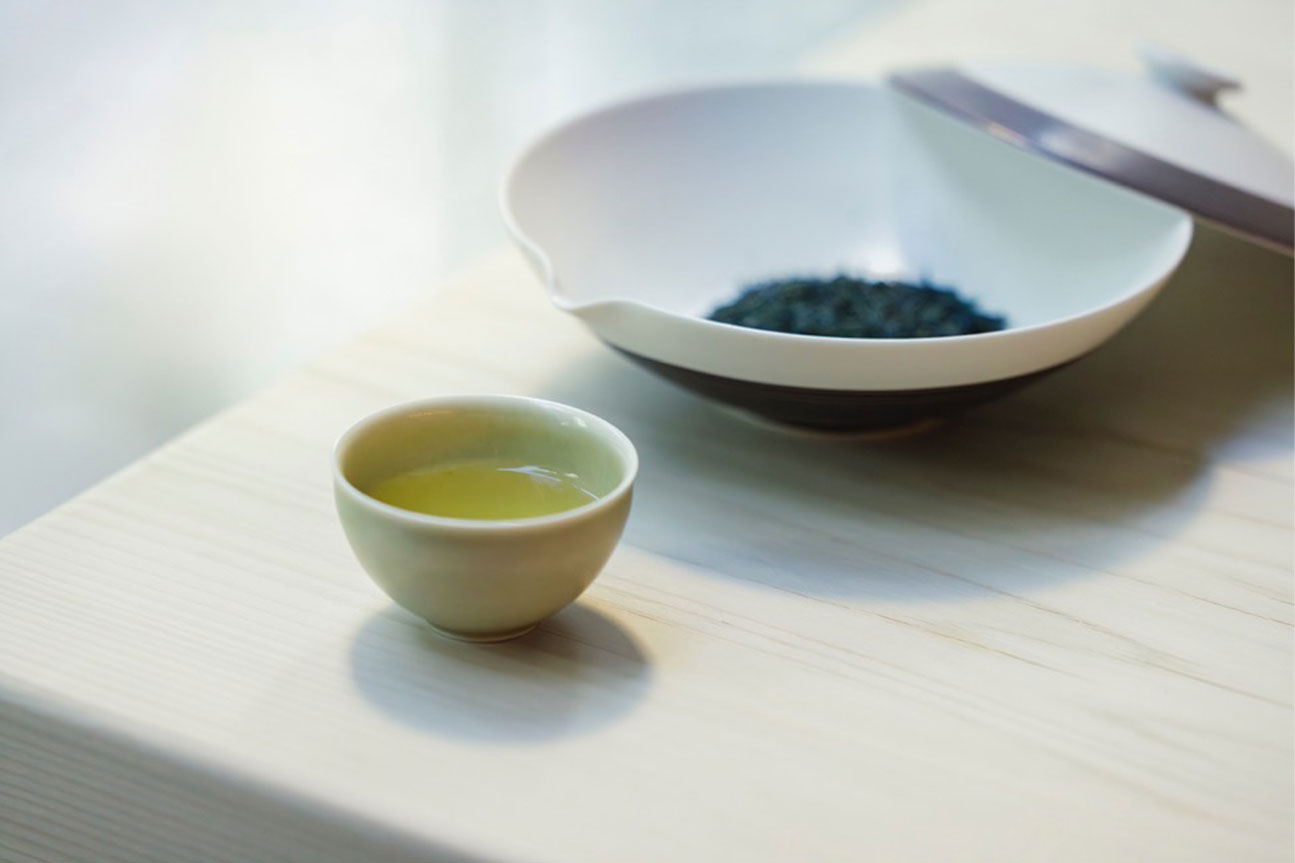
We are soon served a cup of hot Yame 220 sencha from Yame Wanibachi, a tea producer based in the Wanibachi area of Yame. It’s a refreshing, slightly sweet brew, perfectly paired with Matsubaya Saryo’s sencha pound cake.
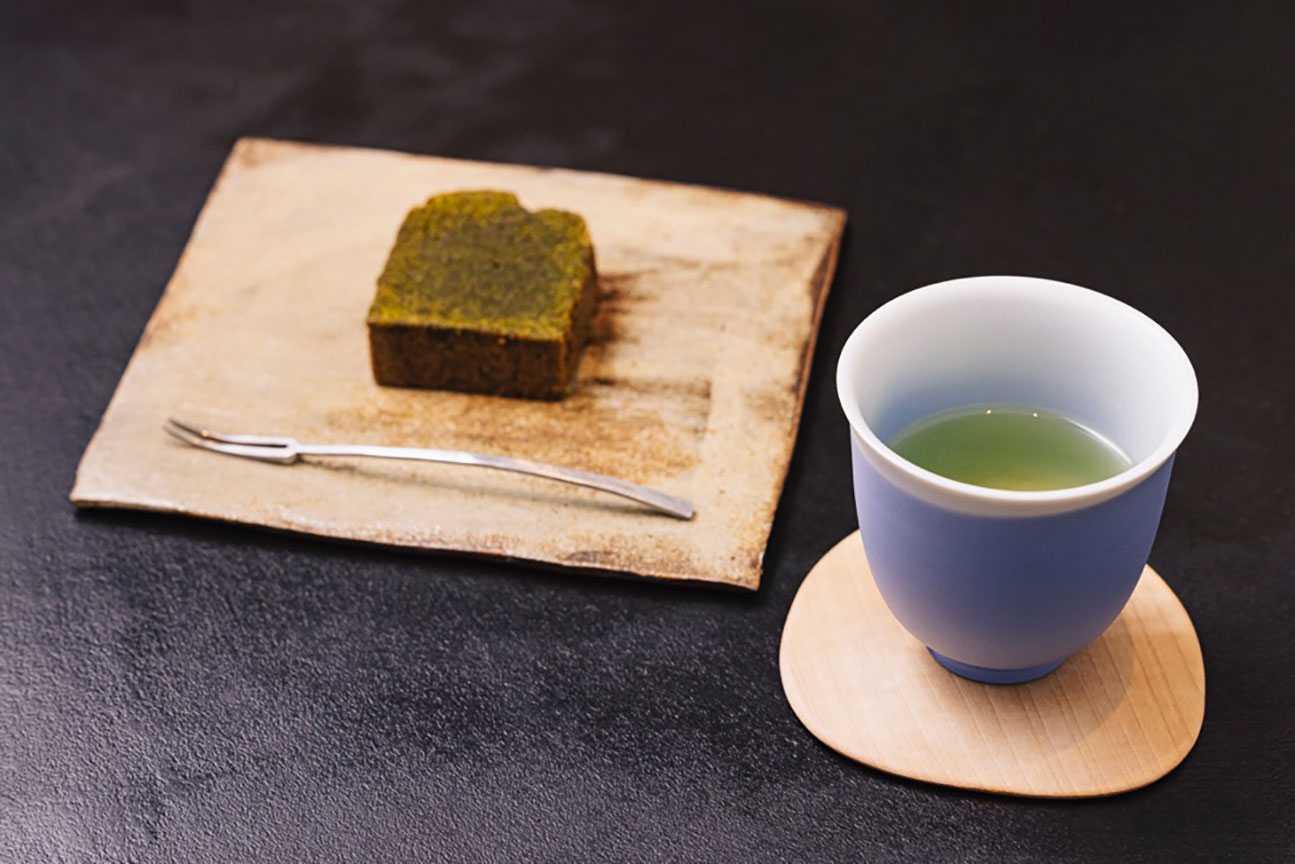
Paired with sencha pound cake, a cup of hot yamecha is a refreshing tonic.
We were served a cold brew sencha called Touge, also from Yame Wanibachi with a sweet no-bake cheesecake. The pairing was exquisite.
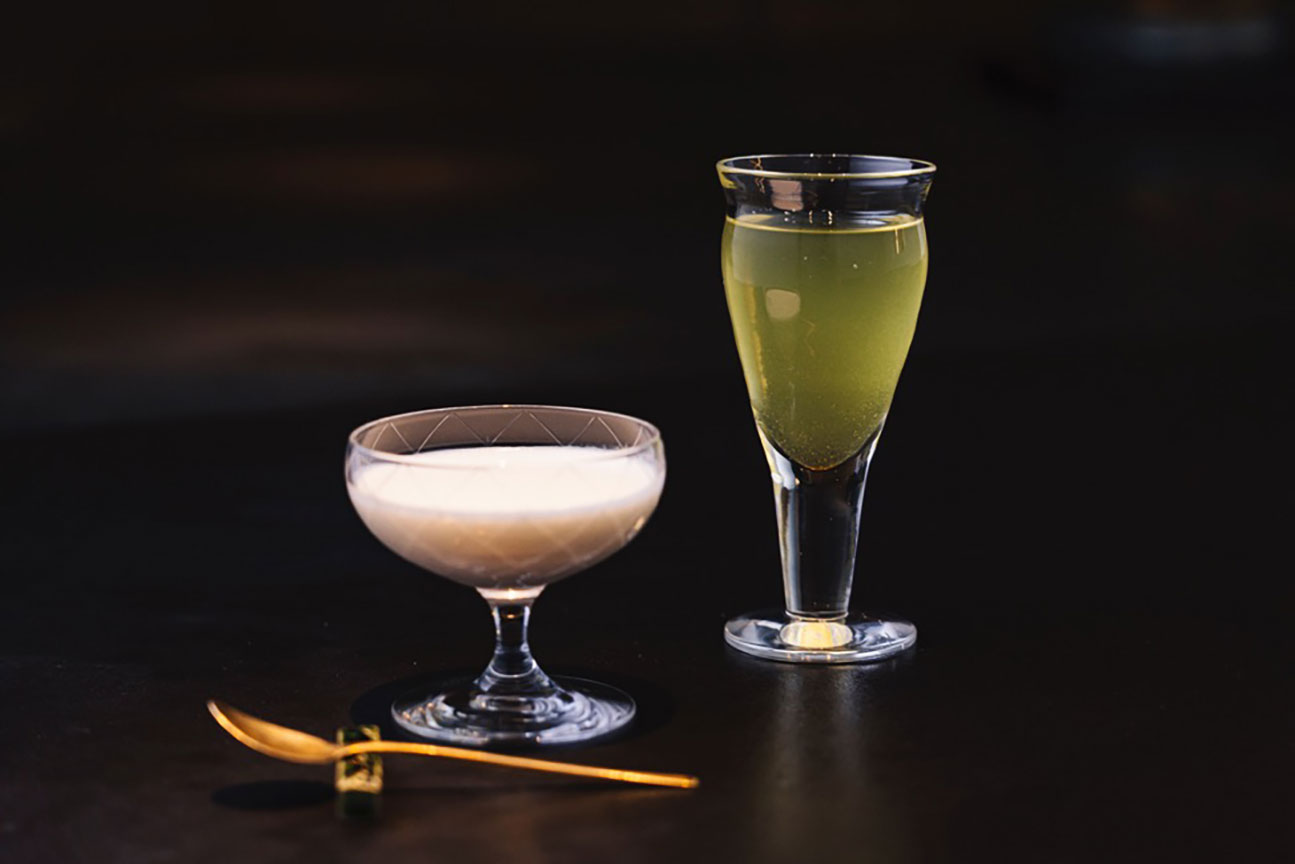
Our cold-brew tea was Yame Wanibachi’s Touge, paired with a sweet no-bake cheesecake called Pure Rare.
Creating the ultimate tea flavor
Yame’s reputation comes not only from its ideal terroir for tea, but also from its long-standing tradition of producing gyokuro . Gyokuro is a premium green tea grown under carefully maintained artificial shade for an extended period. About 20 days before harvest, the tea plants are shielded from sunlight with rice straw screens—transferring the straw taste and aroma to the tea itself, and producing high levels of the amino acid L-theanine and an umami that lingers.
To explore yamecha more deeply through its exceptionally rare and highly prized gyokuro , Brekell recommended we try a shop in the Marunouchi district of Tokyo called HIGASHIYA man marunouchi, so we hopped on the subway and soon arrived there.
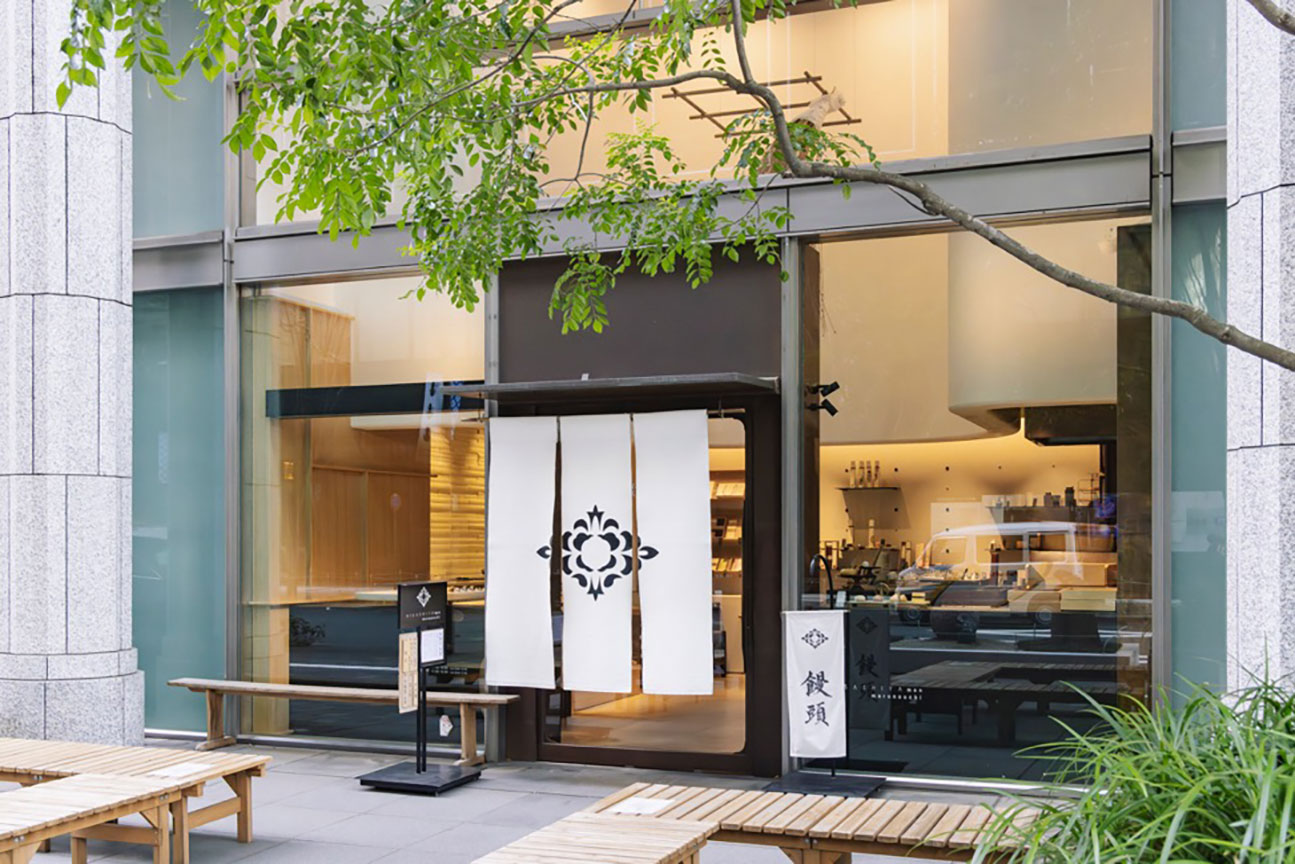
HIGASHIYA man marunouchi is located just a few minutes' walk from Tokyo Station.
Despite being in one of the most important and crowded business districts in Japan, HIGASHIYA man marunouchi has a tranquil atmosphere that envelops visitors passing through its noren curtain. Inside, there is a variety of tea implements, tableware and confections for sale, as well as a space in the back for enjoying tea.
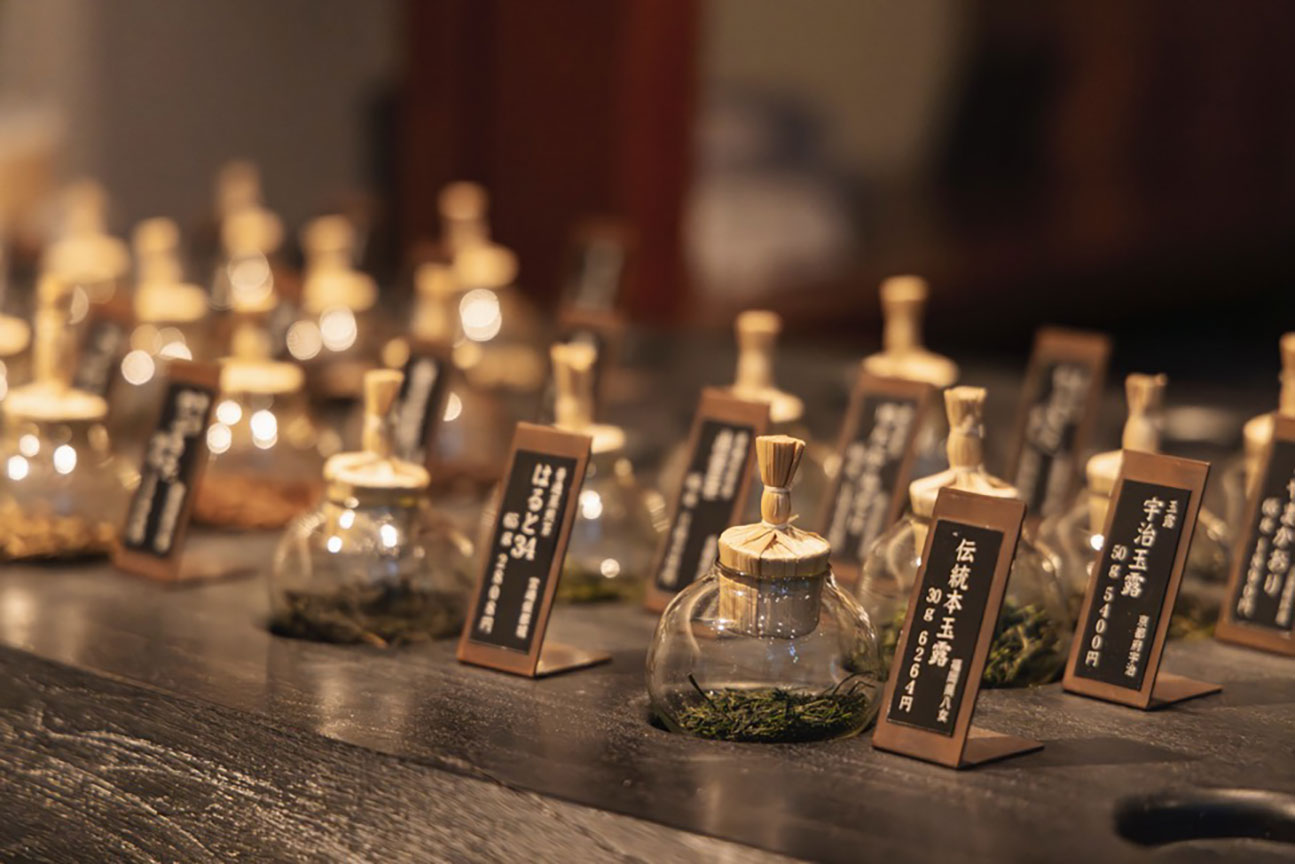
A wide variety of tea leaves, including Yame Dentou Hon Gyokuro, are sold at the shop.
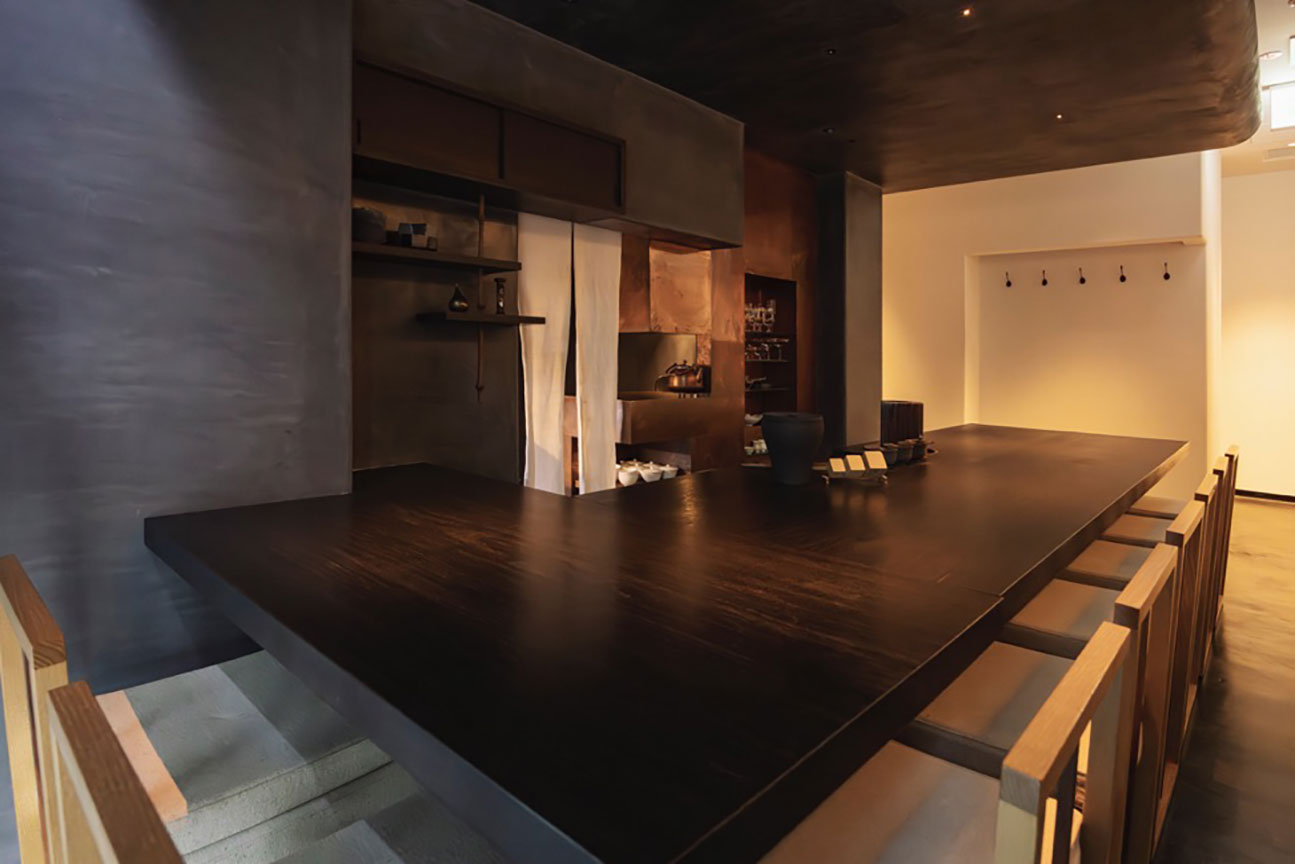
At the back of the shop, there is a space where you can enjoy tea and sweets.
“Everyone should try Yame Dentou Hon Gyokuro, which is very dense, very rich, with fresh green flavors,” says Brekell. When he was served Yame Dentou Hon Gyokuro, he gave me a few pointers about enjoying this luxury brew. Before drinking, one should inhale the aroma that rises when the tea is poured from the gyokuro-houhin teapot into a small cup, noting its sweet tones. Then, get ready to take a sip.
“When you take your first sip, you’ll experience something unique to gyokuro : an explosion of umami,” says Brekell. “If it were only umami, it might feel heavy, but gyokuro also has a fresh, sweet aroma reminiscent of seaweed, like green laver, and a green, leafy note. The contrast between the aroma and what happens in your mouth is fascinating, especially with Yame Dentou Hon Gyokuro.”
The brew should be imbibed little by little, due to its richness, which approaches the flavor of dashi or bouillon. Slowly savoring this is key to enjoying Yame Dentou Hon Gyokuro.
“After finishing the first cup, smell the empty vessel,” says Brekell. “There’s a sweet gyokuro aroma with a hint of seaweed. Even while waiting for the next infusion, you can enjoy the fragrance again. It’s a way to lengthen the tea timeline.”
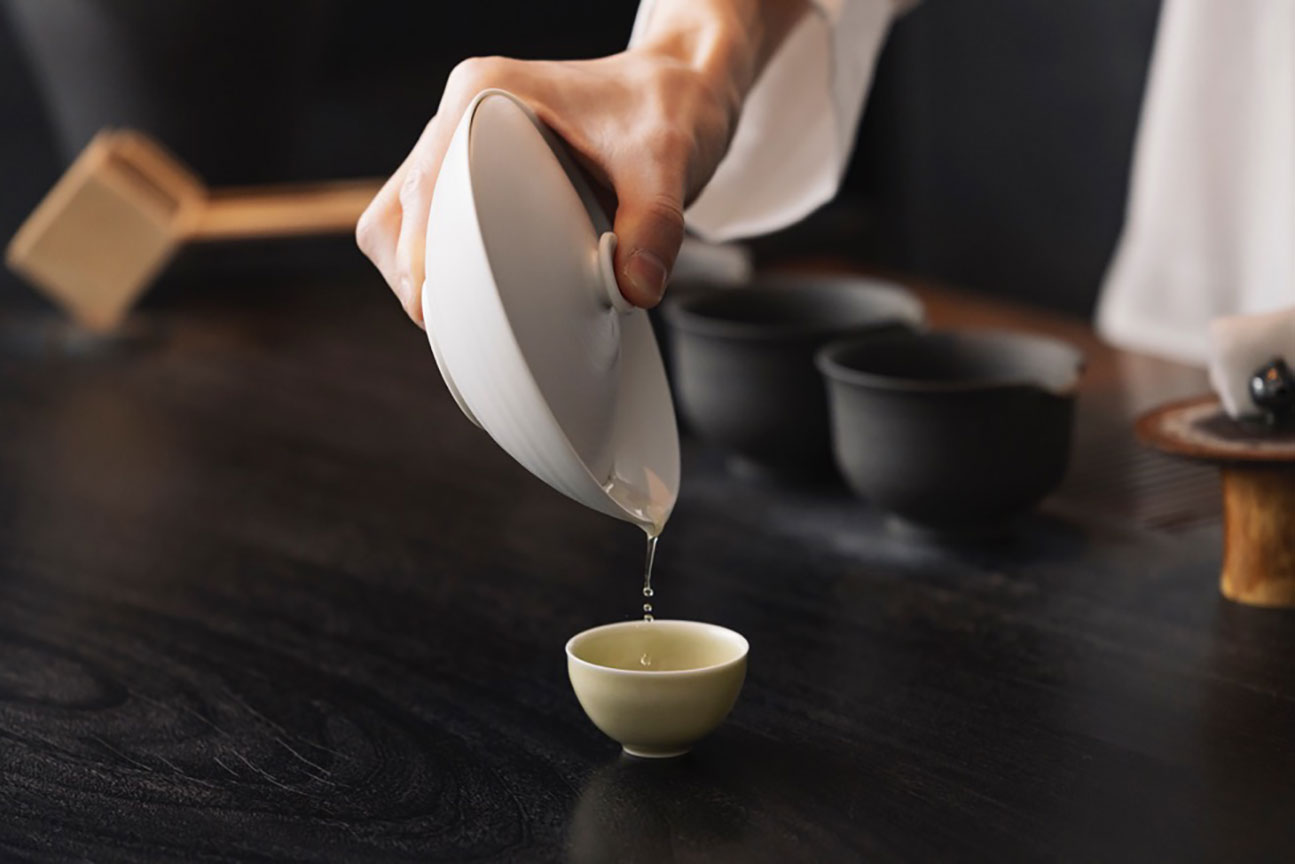
Using specialized tea utensils such as a gyokuro-houhin teapot, carefully brewed gyokuro tea is served in multiple infusions, with each steeping bringing a new balance of flavors and unveiling aromas that were absent in the first pour. Brekell referred to this as a ‘tea journey.’
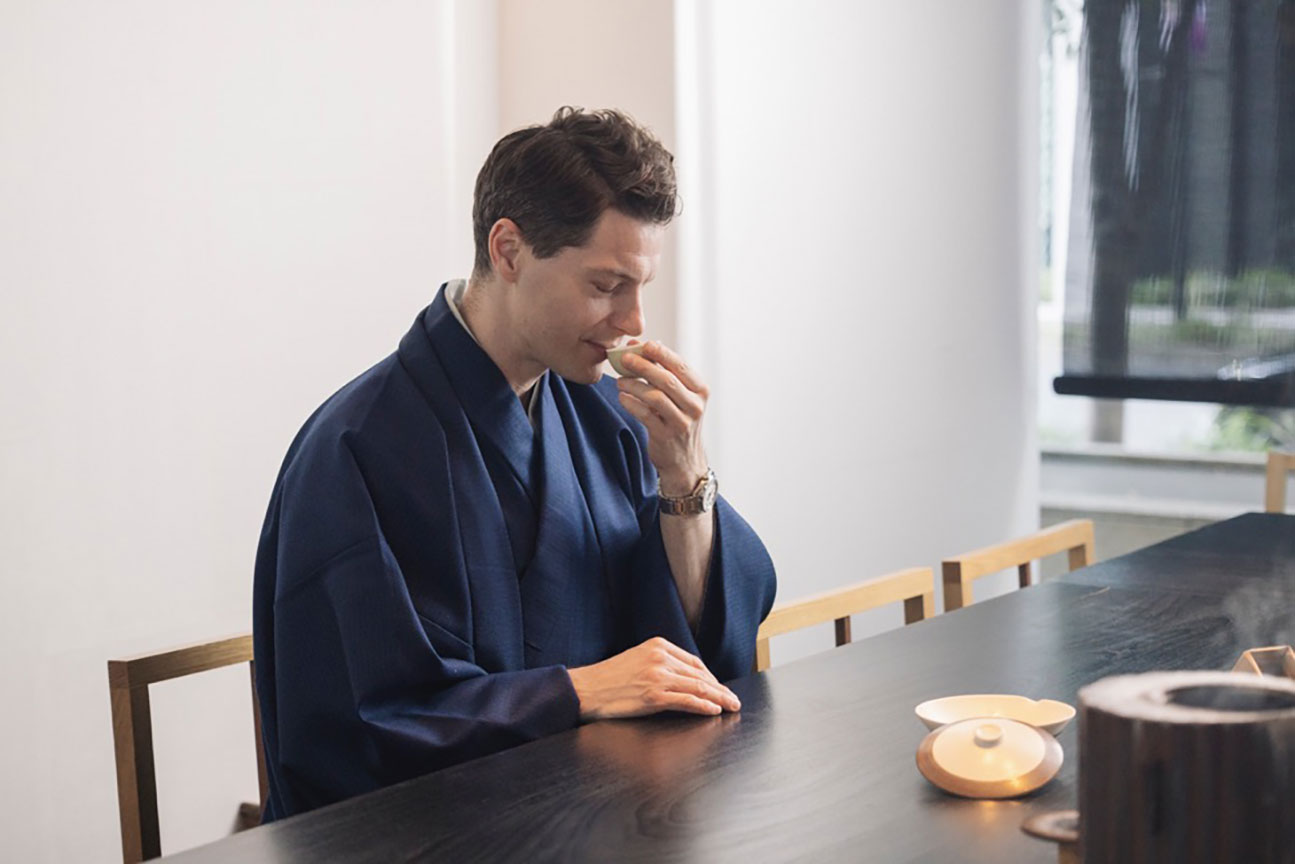
“For first-timers, they might think, ‘Is this tea? Is it dashi or bouillon? Did they add something?’ That moment of confusion is interesting. It’s an experience worth having,” says Brekell.
I could see why Michelin three-star French chef Joël Robuchon praised a deluxe variety of Yame Dentou Hon Gyokuro, sometimes called the king of green teas.
Brekell points out that teas like traditional matcha and Dentou Hon Gyokuro are only harvested once a year, with the aim of getting fewer leaves but larger ones that are rich in flavor and nutrition. Unlike regular teas, gyokuro plants are not pruned into hedges, but allowed to grow freely until they are plucked by hand and pruned to knee-high height.
“What you want is young, tender, soft stems because they’re much better at transporting nutrients from the roots to the leaves and buds,” says Brekell. “In spring you get the new, tender leaves, and that’s what we pluck.”
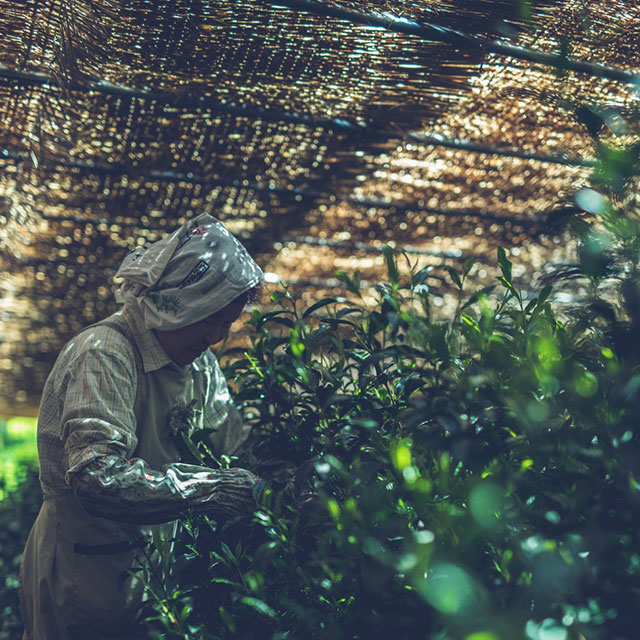
Yame’s tradition is to shade tea bushes with natural materials like rice straw instead of synthetic covers, and to harvest the tender buds by hand. photo: Fukuoka Prefecture Tea Industry Promotion Council
Finally, the tea leaves are served. Brekell recommends eating the soft leaves, which contain fiber and vitamins A and E that don’t dissolve in water.
“The characteristics of Yame Dentou Hon Gyokuro are its fresh aroma and sweetness, and its umami,” he says. “By eating the tea leaves at the end like this, you can enjoy those qualities to the fullest.”
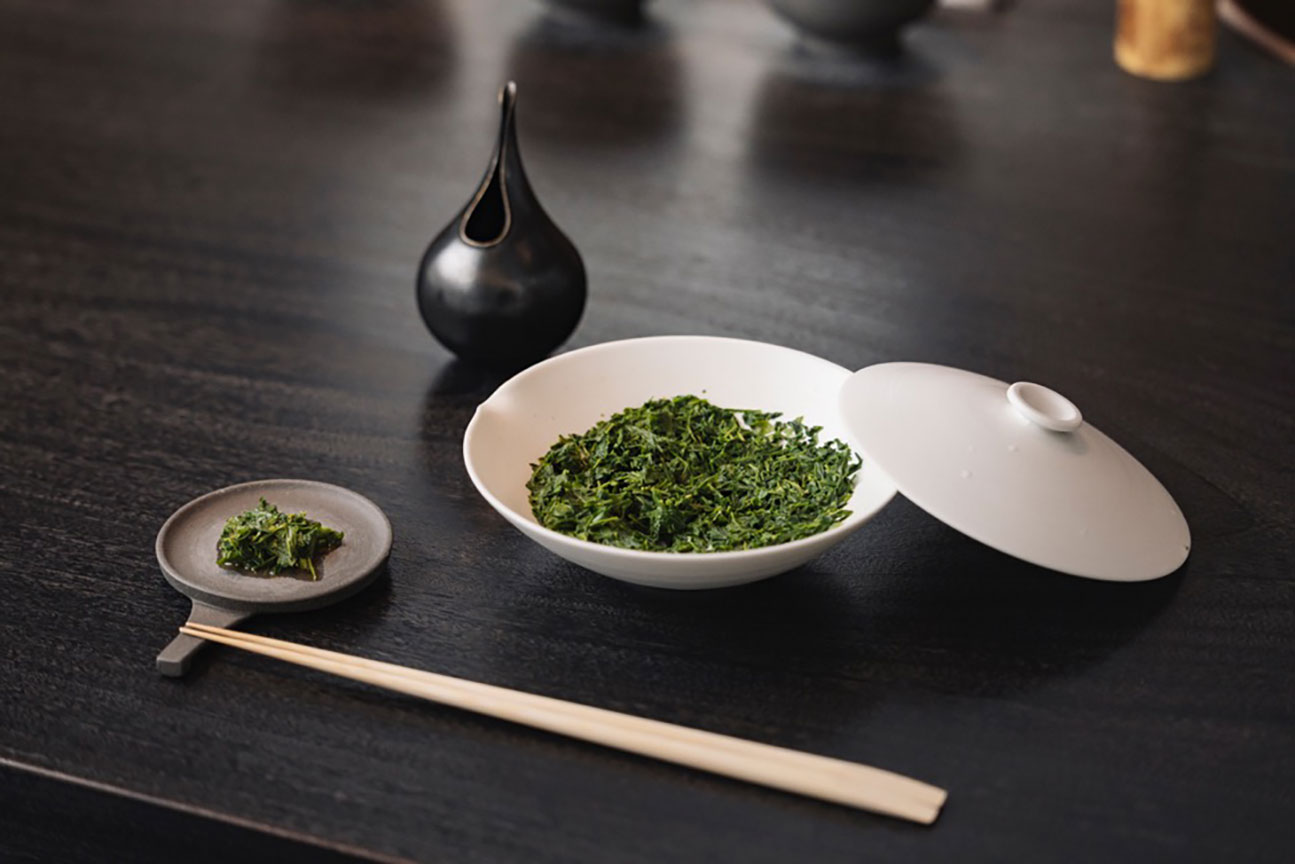
“Not all teas are suitable,” Brekell says. “Black tea and oolong are too tough. But Japanese teas, especially sweet ones like Yame Dentou Hon Gyokuro, are perfect.”
How to appreciate Yamecha at home
Tasting yamecha at teahouses in Tokyo is an unforgettable experience, but what about at home? I asked Brekell what enthusiasts can do to fully appreciate yamecha and Japanese tea culture.
He recommends getting a classic stoneware Japanese teapot from Tokoname or Yokkaichi—but don’t use water that’s too hot, as it will release too much of the bitterness. Instead, start by following the general recommendations for the respective teas (50–60°C or 120–140°F for gyokuro and 70–80°C or 160-175°F for sencha ). For cold-brew teas, he suggests a filter-in bottle from Hario or other makers that will bring out the natural savoriness and sweetness of yamecha . As for food pairings, yamecha works well with wagashi sweets, mochi, cheesecakes, panna cotta or white chocolate.
Given the runaway success of matcha, Brekell has high hopes for the future of yamecha , and hopes it can be a bridge between Japan and other cultures.
“I would like to tell matcha tea lovers that I recommend they take their time and brew tea and appreciate the different tastes and flavors you get from the first steeping, with all the umami, the second steeping with a good balance of astringency and sweetness, and then the flavor unfolds over several infusions. You can make that journey every day. If you just gobble down your matcha, you’re missing out.”