Crown Melon - The Luxury of One Vine, One Fruit
Glittering under the sunny skies of Shizuoka Prefecture, slanted glass greenhouses protect the region’s most precious agricultural gem: the Crown Melon. Already beloved in Japan as a special treat or gift, this luxurious fruit is gaining fans overseas as well.
Crown Melon: Japan's Premier Greenhouse Melon
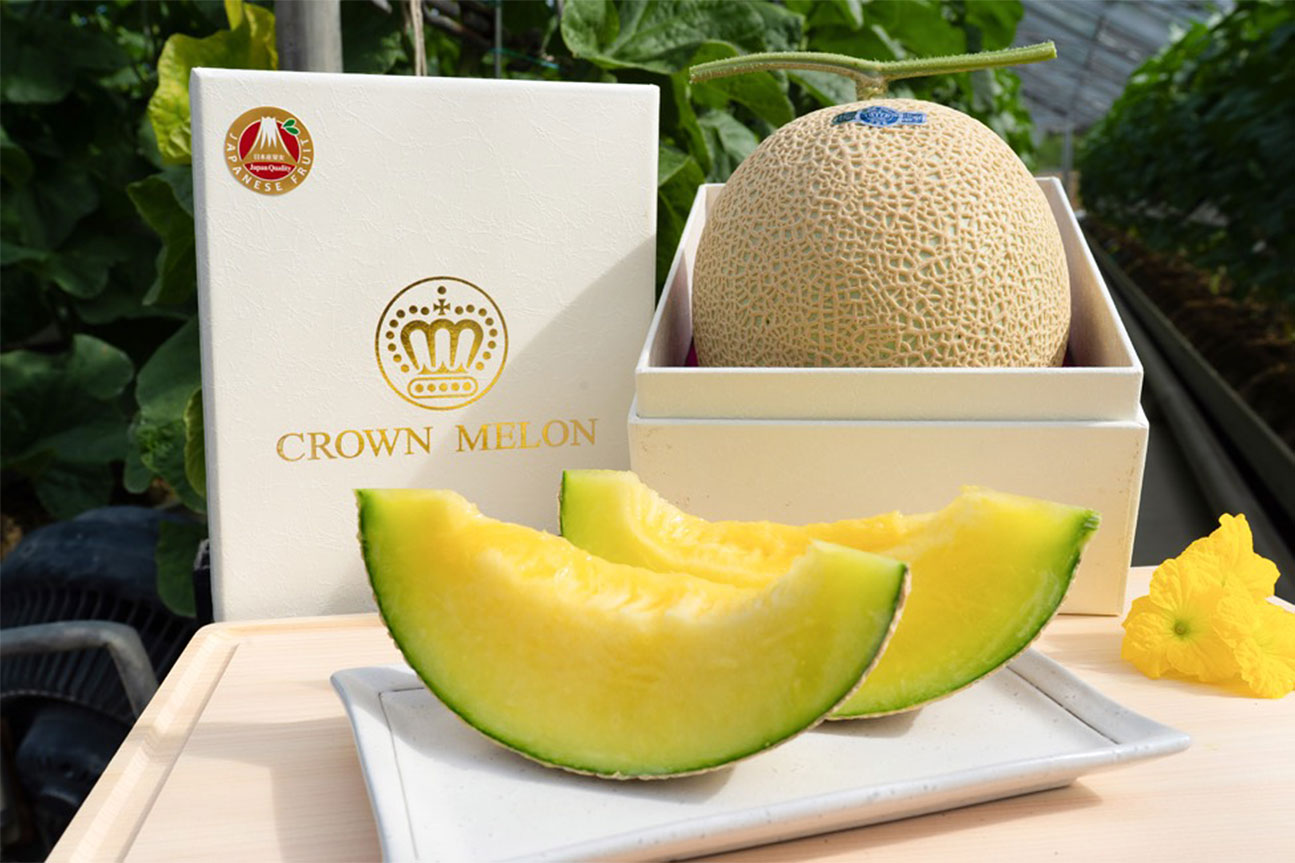
Often regarded as the highest-quality muskmelon variety available in Japan, the Crown Melon stands apart. Before sampling the fruit itself, its appearance alone is already striking. The light green rind covered with a cream-colored even netting gives the impression of the elegant crackling on a celadon pot. On top the stalk extends long and straight on either side.
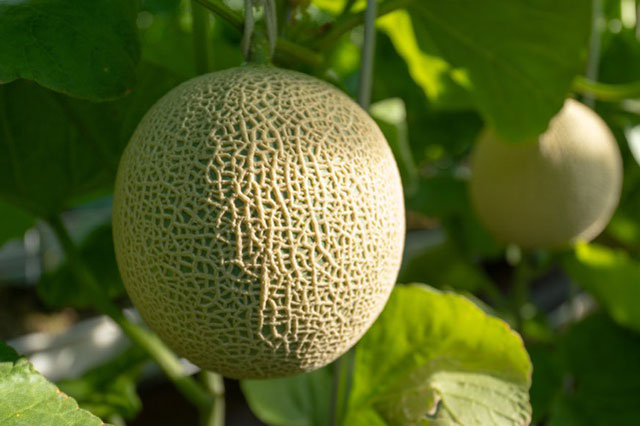
A Crown Melon with perfectly even, delicate netting
Slicing into one of these globes, one is immediately hit with the rich, heady aroma of the fruit. When fully ripe, the melon’s flesh almost seems to melt in your mouth, with a rich nectar that is sweet yet refined and lingers long on the palate.
These delicious melons are grown exclusively around the Fukuroi area of Shizuoka Prefecture. However, not every melon is chosen to receive the iconic crown-shaped seal from which they take their name, as each fruit must meet strict standards. Early in the morning at the Crown Melon agricultural cooperative, experts check each individual melon and, if it passes muster, certify it with a stamp and seal. Only the best of the best of each crop makes it to tables around the country (and now the world).
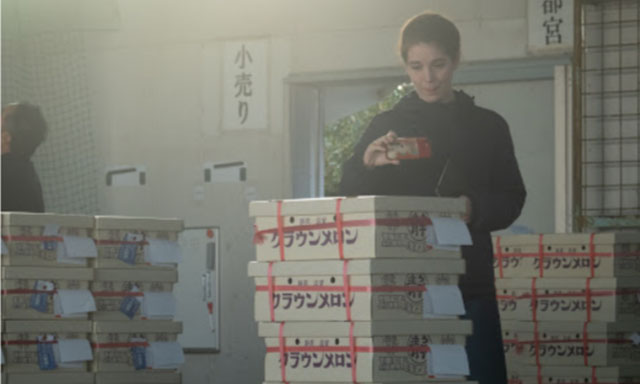
At the sorting facility, only selected melons are shipped bearing the Crown mark
Of course, the care and attention of the farmers, strict controls and love that goes into growing Crown Melons makes them highly prized. They are a favorite option for giftgiving in Japan, where it is customary to give friends, family and work associates luxurious brand fruit for special occasions and celebrations.
But these days Crown Melons are not only thrilling people at home but also internationally, and are even sold at Harrods, the luxury department store in London.
The History and Future of the Crown Melon
Finding this Japanese gem at Harrods is in some way a return to the melon’s roots, as in 1921 a handful of farmers in Shizuoka started growing melons, and quickly settled on a cultivar variety called Earl’s Favorite, which originated in the United Kingdom.
For over a hundred years since, farmers have made excellent use of Fukuroi’s warm climate and long hours of sunlight, using glass greenhouses which are slanted to allow each plant an equal amount of light. By controlling the greenhouse temperature, Crown Melons are grown all year round, usually taking about 100 days from seed to fruit.
One unusual part of the growing process is their "one vine, one fruit" cultivation method, which concentrates all its energy into a single globe, one of the secrets behind the inimitable sweetness of their melons.
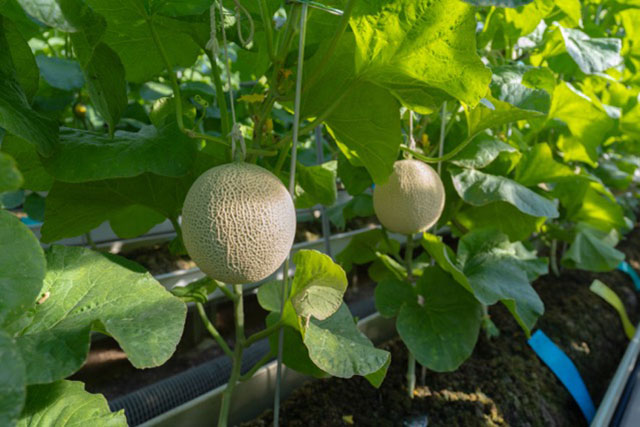
The “one vine, one fruit” cultivation method
Yosuke Suzuki is the General Manager of the Shizuoka Crown Melon agricultural cooperative, notes that besides categorizing and ensuring quality, the cooperative is also central to selling, shipping and promoting this local specialty around Japan and internationally, along with researching greenhouse cultivation methods and technology.
“Our aim is to produce the best melons in the world, and we provide support and inspire our farmers to reach for the utmost quality,” says Suzuki. “We cannot rest on our laurels but must keep up the caliber we have been known for over the past 100 years.”
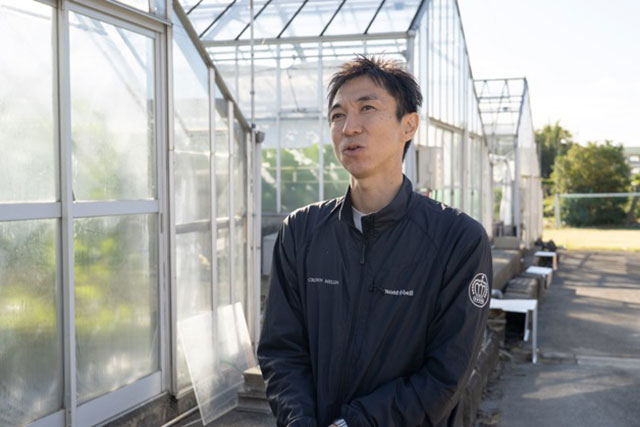
Yosuke Suzuki, Shizuoka Crown Melon Agricultural Cooperative
Part of their work is also focused on dealing with the effects of climate change. Suzuki mentions that farmers are using shade clothes to control the temperatures, along with fans, air conditioning and misting devices. The cooperative is also looking into technological solutions to help farmers, although much of the work is still highly manual.
The Unstinting Efforts of Melon Farmers
The Sawaki family are one of around 200 producers of Crown Melons, with an orderly farm tucked up against a wooded hillside. Masaru Sawaki is a second generation melon farmer, and works along with his son Toshifumi and both their wives.
The Sawakis have been growing melons for 72 years. “Originally the farm grew produce like strawberries, but right after high school my father heard of the potential of Crown Melons, and here we are!” says Masaru. Starting with just two glass and wood greenhouses, now 12 large modern ones surround their home.
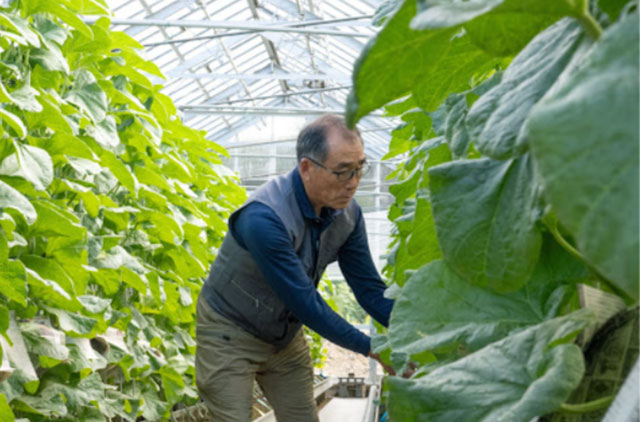
Crown Melon grower Masaru Sawaki
Walking through the warm greenhouses, everything is in perfect order, with clear walkways and every individual vine carefully trellised straight up a stake. Masaru explains that each vine is grown until it has around 14 “forks” of flower clusters and around 14 leaves. When it is the correct size, all flower clusters except one are removed, which is then hand pollinated. Once the melons begin to grow, every single one is supported with twine and covered with a dome made from newspaper, so the rind maintains an even color.
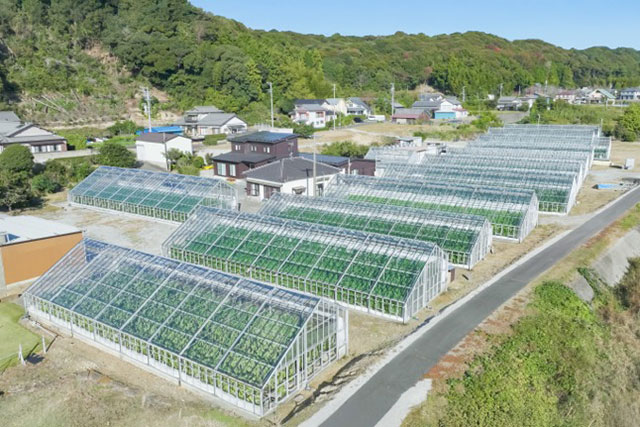
Twelve orderly greenhouses at the foot of a wooded hillside
All of this is done by hand. While there have been modernizations in Crown Melon farming, such as automatic temperature and humidity control, many aspects still require attentive daily care. Masaru’s son sweeps a practiced eye over the soil trays that keep the plants at the perfect angle to each receive equal amounts of sun, and waters them at carefully timed intervals. Masaru points out seedlings that are ready to be planted, noting how this should be done when the leaves are slightly drooping.
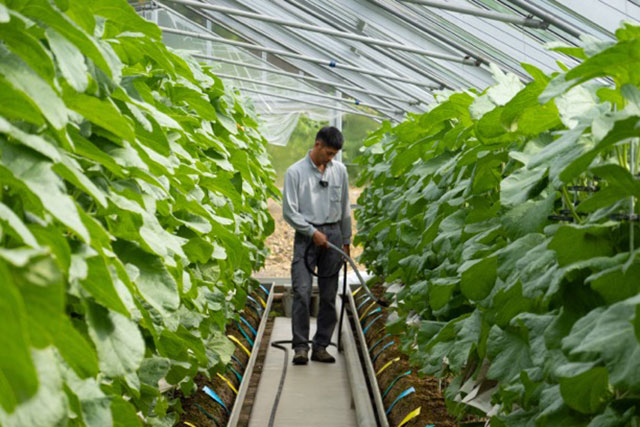
Toshifumi Sawaki carefully watering at precisely timed intervals
This labor and attention to detail may seem shockingly inefficient. But productivity is not the point; perfection is. “We aim for each fruit to reach around 1.4~1.8 kilos,” explains Masaru, as he judges each globe’s weight purely by feel. “The ideal melon should have an even color, and elegant netting that is smooth to the touch.”
The Sawaki family’s dedication to Crown Melons seems likely to continue, as Toshifumi’s son is attending an agricultural college, while also learning the family’s secrets of the trade. “There are so many small details you have to understand, so learning by example is the best way. That is how I learned and how I taught my son and now my grandson,” says Masaru.
The Perfect Result of Patience
Watching the Sawaki family work together is inspiring. The truly Japanese patient dedication to creating a perfect melon that will bring a smile as a special treat or gift, and the unwavering commitment despite the heat of the greenhouses and continuous cycle of growing are the secret to why Crown Melons are so delicious and unique.
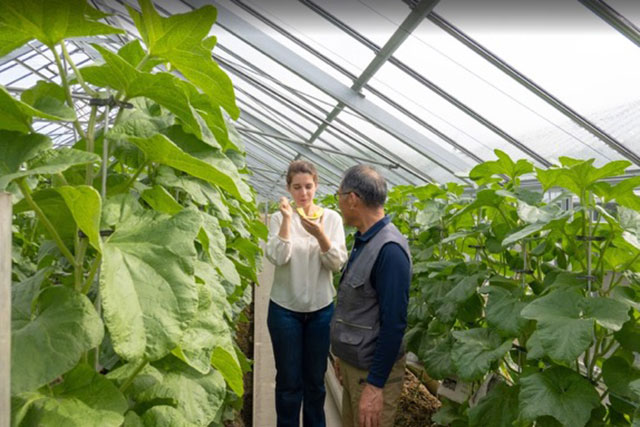
Savoring the melons grown by Mr. Masaru Sawaki
It is not often that one can experience craftsmanship with all five senses. The loving care and long history of creating these melons comes through in the heavenly aroma, the sweet nectar, the visual beauty of the unblemished rind and netting that feels smooth underhand and, finally, the appreciative sighs of those lucky enough to sample a Crown Melon. It is quite an experience.