Wakayama’s Sweet Season: Kaki Culture on the Slopes of Koyasan
Deep in the forested mountains of Wakayama Prefecture lies the Buddhist temple complex known as Koyasan. It was established by the renowned Buddhist monk Kukai (774–835), the founder of esoteric Buddhism in Japan. It was here that he spent his later years until his death, and here at Okunoin Temple is where he is believed to remain in eternal meditation. Twice each day, in an age-old ritual known as Shojingu, food is offered to him. Among these offerings are “Wakayama kaki”—the celebrated persimmons grown in this prefecture. Wakayama Prefecture is, in fact, Japan’s largest persimmon producer, and the sacred mountain is partly responsible for the deep flavors of the local varieties of this beloved fruit.

In an age-old ritual, monks deliver meals to present to the founder of esoteric Buddhism, believed to be eternally meditating at Koyasan’s Okunoin Temple. (Photo: Wakayama Tourism Federation)
Not far away, on the slope of a steep, wooded mountain—up a narrow, winding road, past a clear stream rushing over a boulder-strewn valley floor—is the picturesque orchard where Shingo Nakatani is clipping a plump, bright orange fruit from a leafy tree. It is a cool mid-November day, the height of harvest season, and the bucket slung over his shoulder is already full. All around him, the branches of the trees droop from the weight of ripe persimmons.
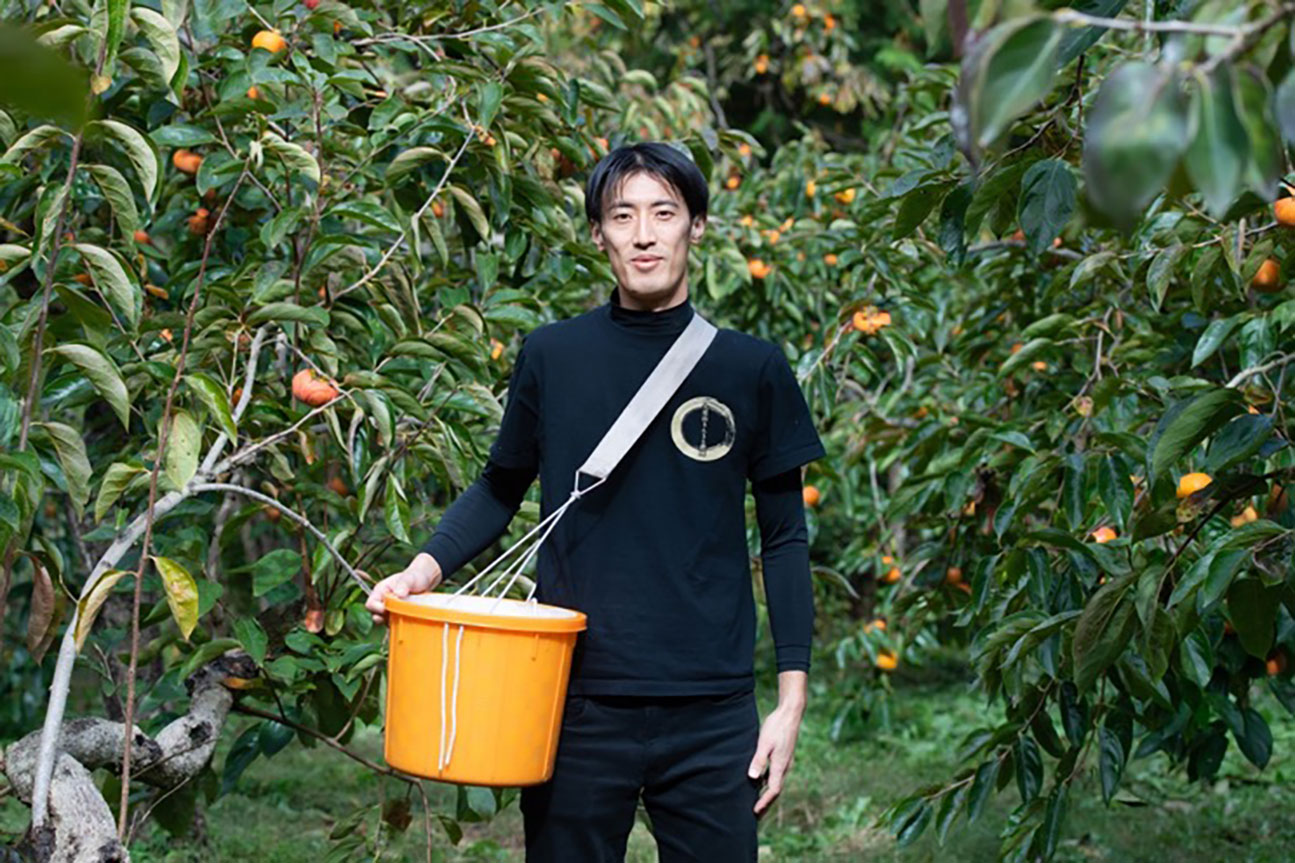
Shingo Nakatani, the fifth generation farmer of Kudoyama Manmaru Farm, with his harvesting bucket in the family orchard.
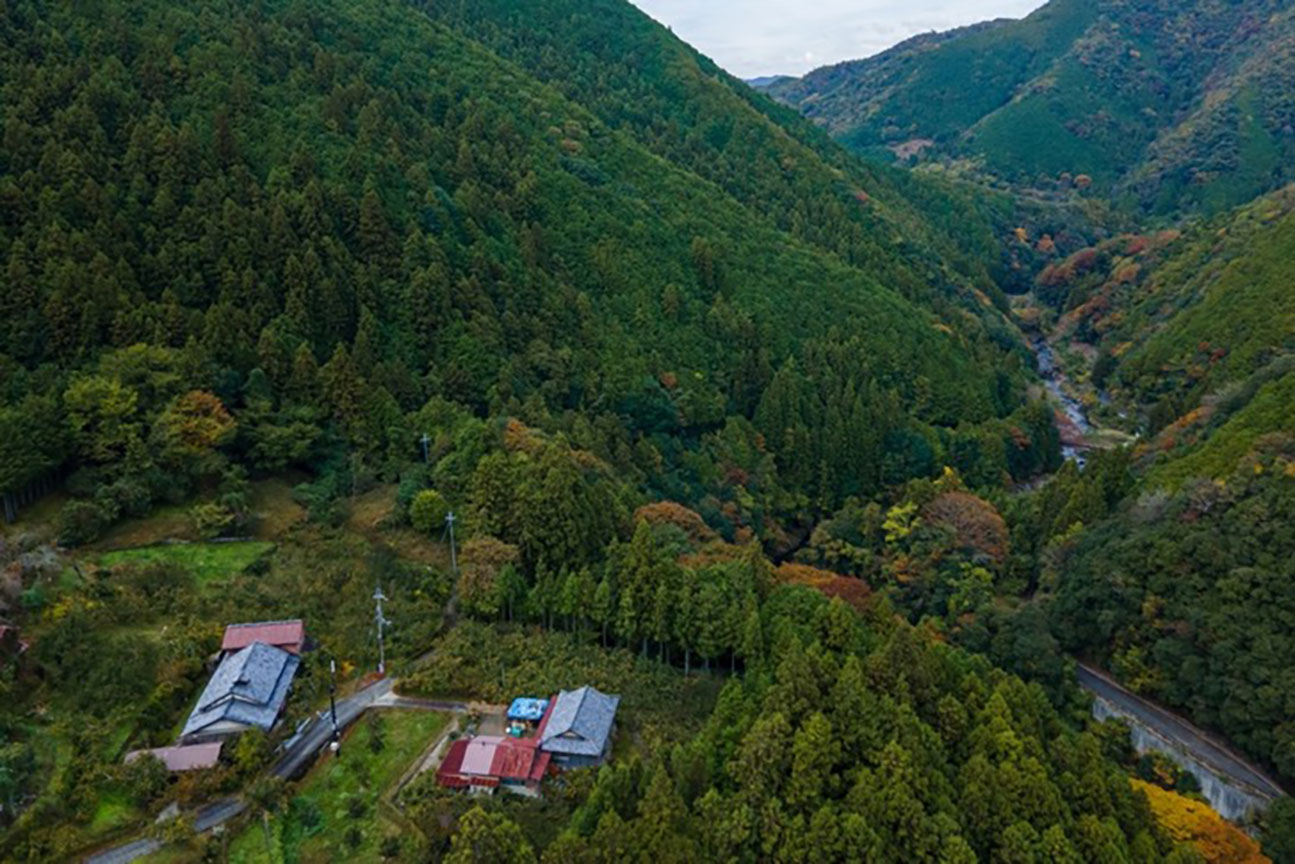
Kudoyama Manmaru Farm is located on the slopes of a steep, forested valley north of Mt. Koya.
The Fruits of a Sacred Mountain
Nakatani is the fifth generation of a family growing sweet Japanese persimmons (kaki) on their 2000-square-meter orchard—including the non-astringent fuyu variety filling his bucket today. But the history of kaki goes even further back. These sweet persimmons are native to Japan, and as one of Japan’s most familiar fruits, have been part of Japanese culture since the early 13th century. In the 16th century, Portuguese traders helped spread their popularity to Europe and beyond. The fruit was celebrated for its flavor—sometimes described as “honey sweet”—but has since been found to be rich in nutrients, antioxidants, and fiber. Today, the fruit is widely known, and the term kaki is often used internationally.
Nakatani’s family orchard, Kudoyama Manmaru Farm, is in Kudoyama at the foot of the sacred mountain where the temple town of Koyasan is located. The relationship between the religious center and the surrounding mountains is deep. “In fact, one of the pilgrimage routes to Koyasan—the Kuroko Route, which is a registered UNESCO World Cultural Heritage site—passes directly through our orchard,” says Nakatani. “Pilgrims and hikers from Japan and overseas walk the trail through our trees on their way to Koyasan.”
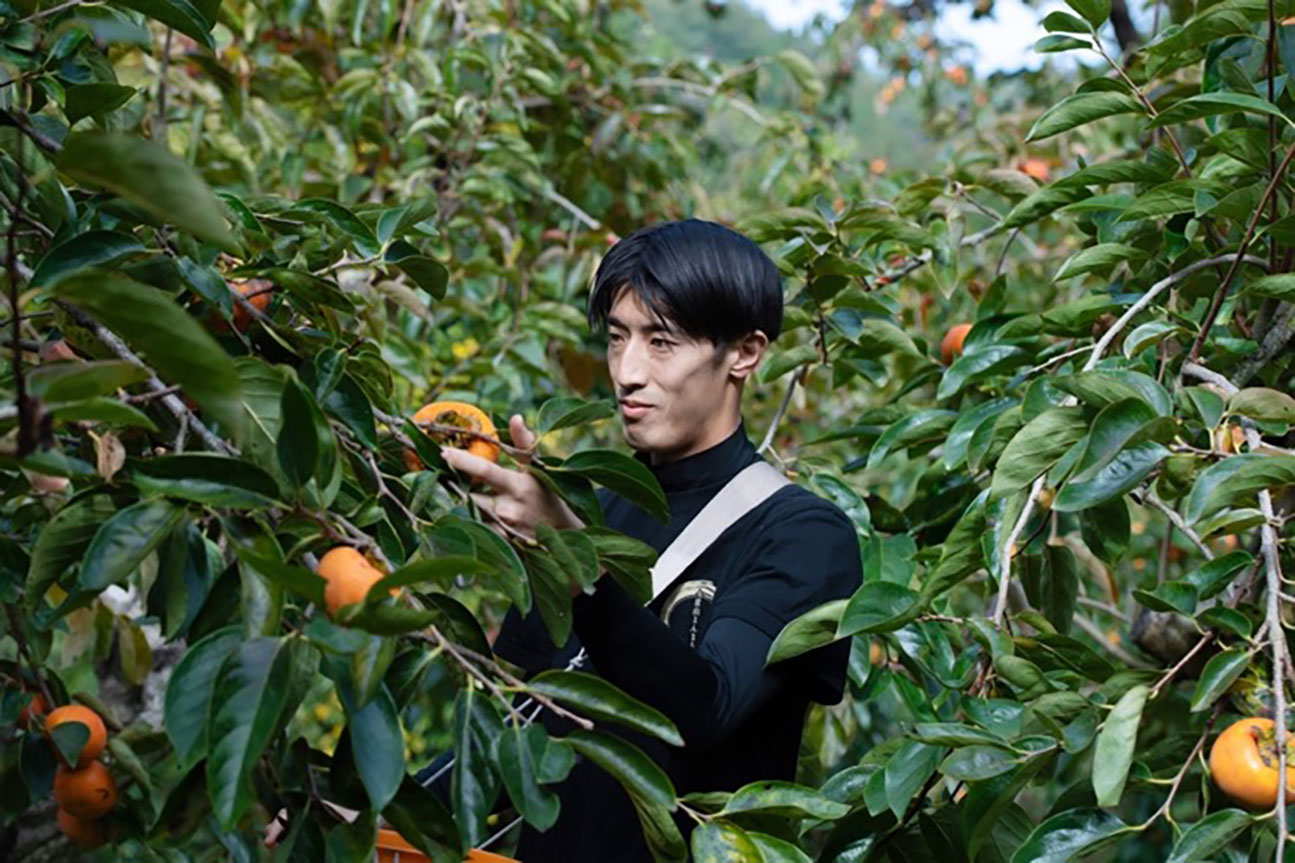
The ripeness of the kaki is judged by the color, and dictates the time of harvest, according to Nakatani.
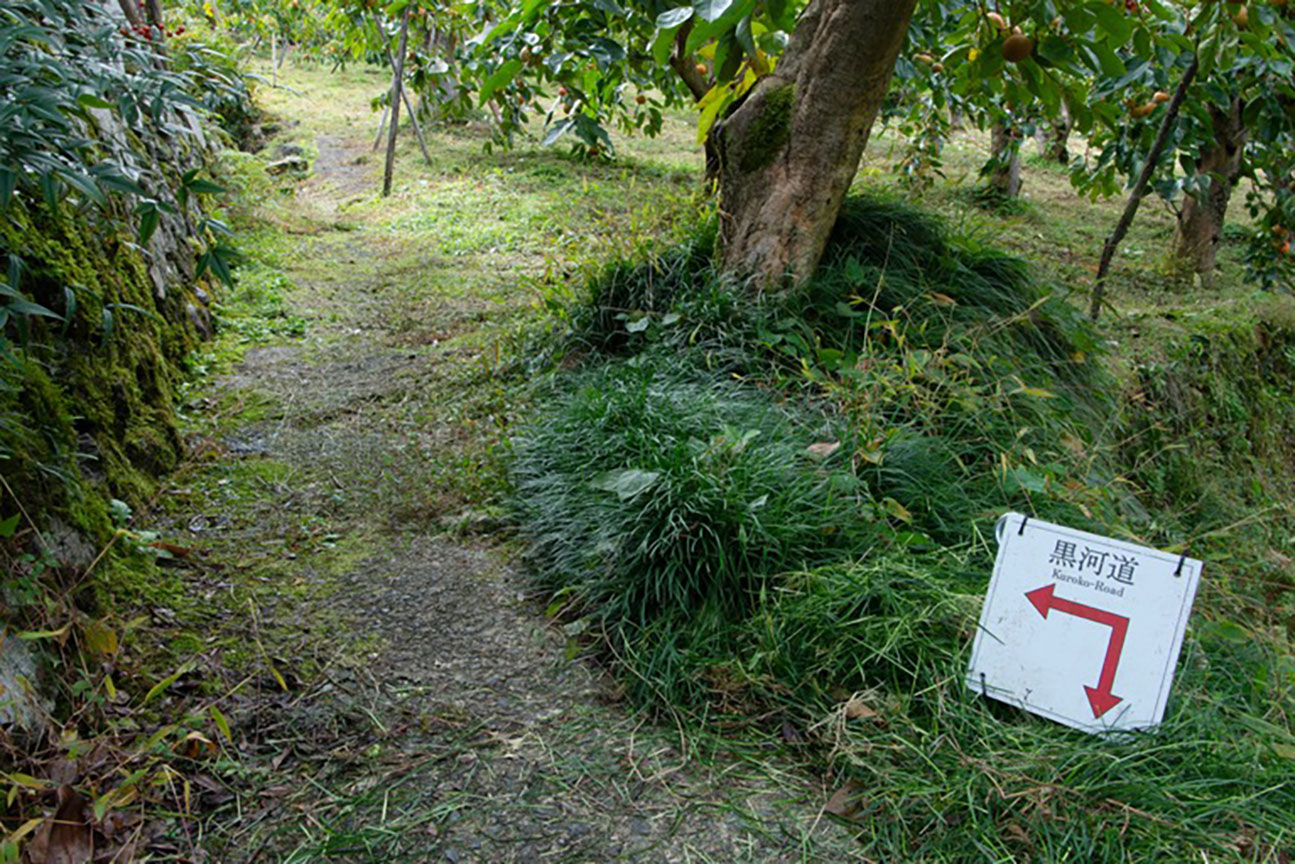
The Kuroko Route, a pilgrimage trail leading to the sacred site of Koyasan, runs directly through Kudoyama Manmaru Farm’s orchard.
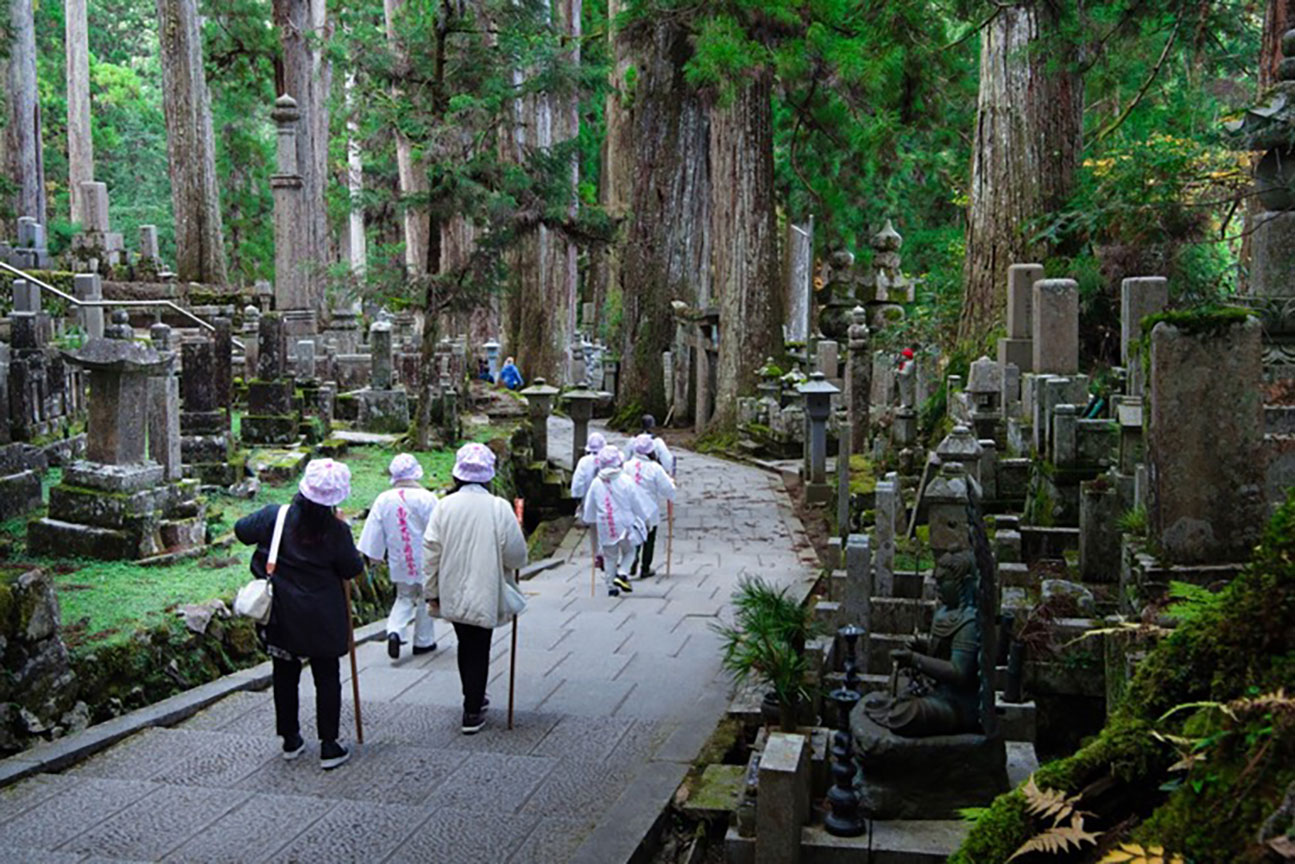
Tourists and pilgrims stroll the grounds of Okunoin, Koyasan’s revered forest cemetery is the resting place of celebrated samurai, feudal lords, and spiritual leaders.
According to Nakatani, this location is perfectly suited to growing kaki. Temperature differences are critical for developing sweetness, and the days here warm under the sun while the nights cool with winds blowing down from Mt. Koya to the south. The orchard’s steep incline also ensures that the trees benefit from nutrient-rich water flowing from higher altitudes.
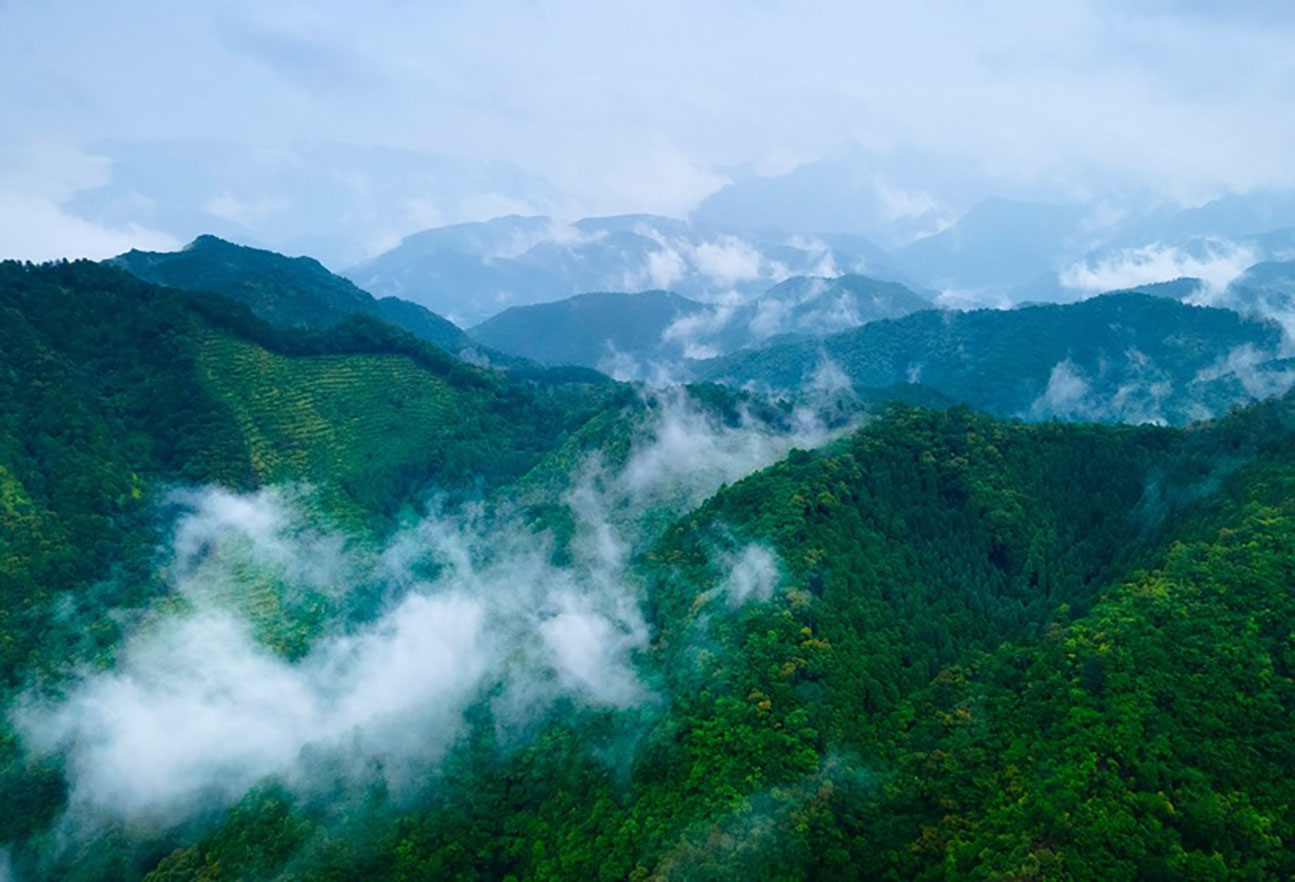
The mountain range surrounding Koyasan. The winds from here cool the valleys, creating a temperature difference that helps grow sweet tasting kaki.
The “King of Kaki” and More
Although there are many varieties of kaki, this family farm focuses on a select few. The seedless tanenashi variety is an “astringent” type that is harvested early, in September and October. “These have a crisp texture and a clean, refreshing sweetness,” says Nakatani. “But they must be processed to remove their astringency after harvest.” His top recommendation is the fuyu-gaki, the “fully sweet” variety now stacked in his bag. “Fuyu-gaki are known as the ‘king of kaki,’” he says. “When firm, they have a pleasant crunch, and as they soften, they develop a custard-like texture—becoming juicier and more flavorful.” These are harvested from late October to the end of November in Kudoyama.
Harvest season is not the only busy time for kaki growers. Winter is dedicated to pruning, while May involves removing early buds to maximize fruit production. “We generally trim the branches, leaving about twenty leaves for each fruit,” says Nakatani. “This creates the best conditions for growing large, delicious kaki.” Later in the year, just before harvest time, bags are tied around some of the more perfect specimens to prevent blemishes. These are premium fruits aimed at the New Year gift market.
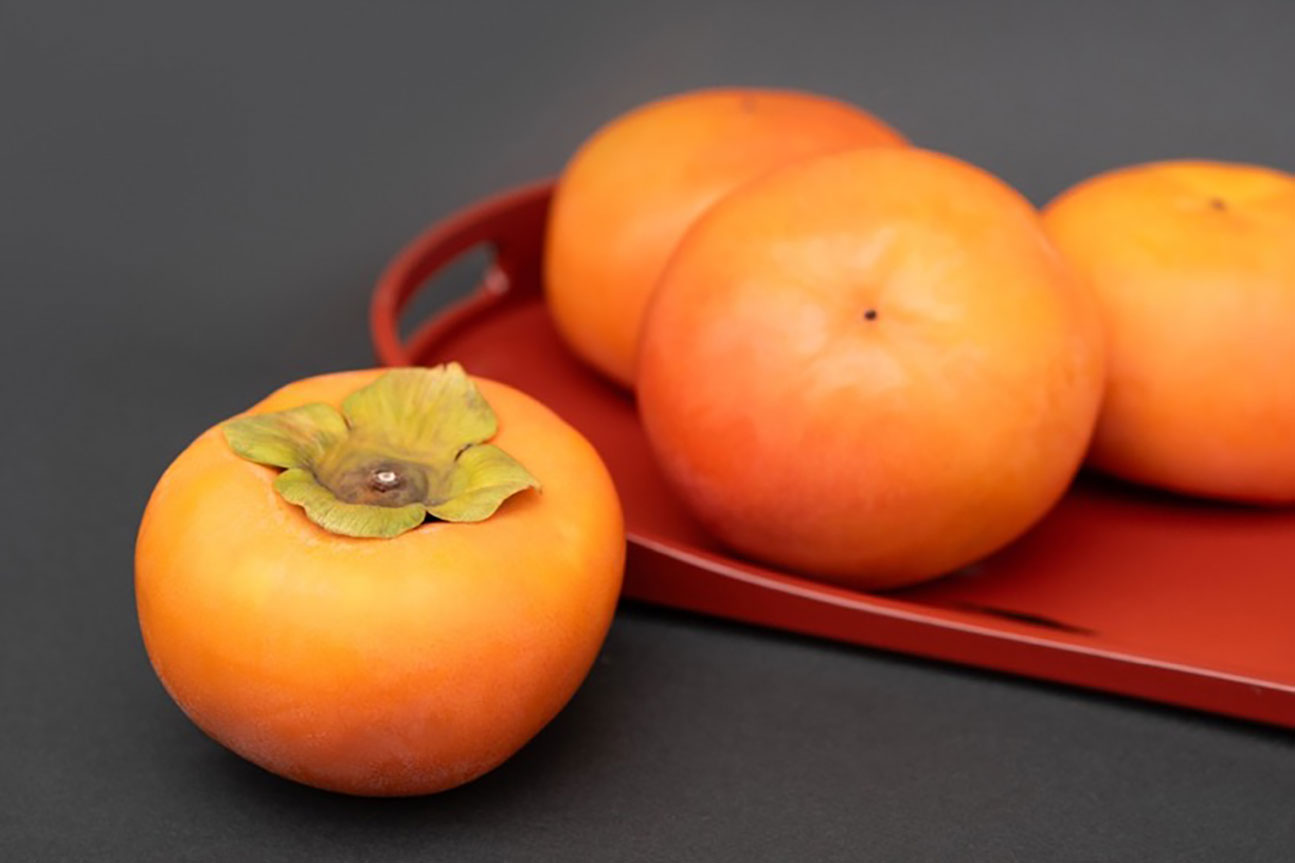
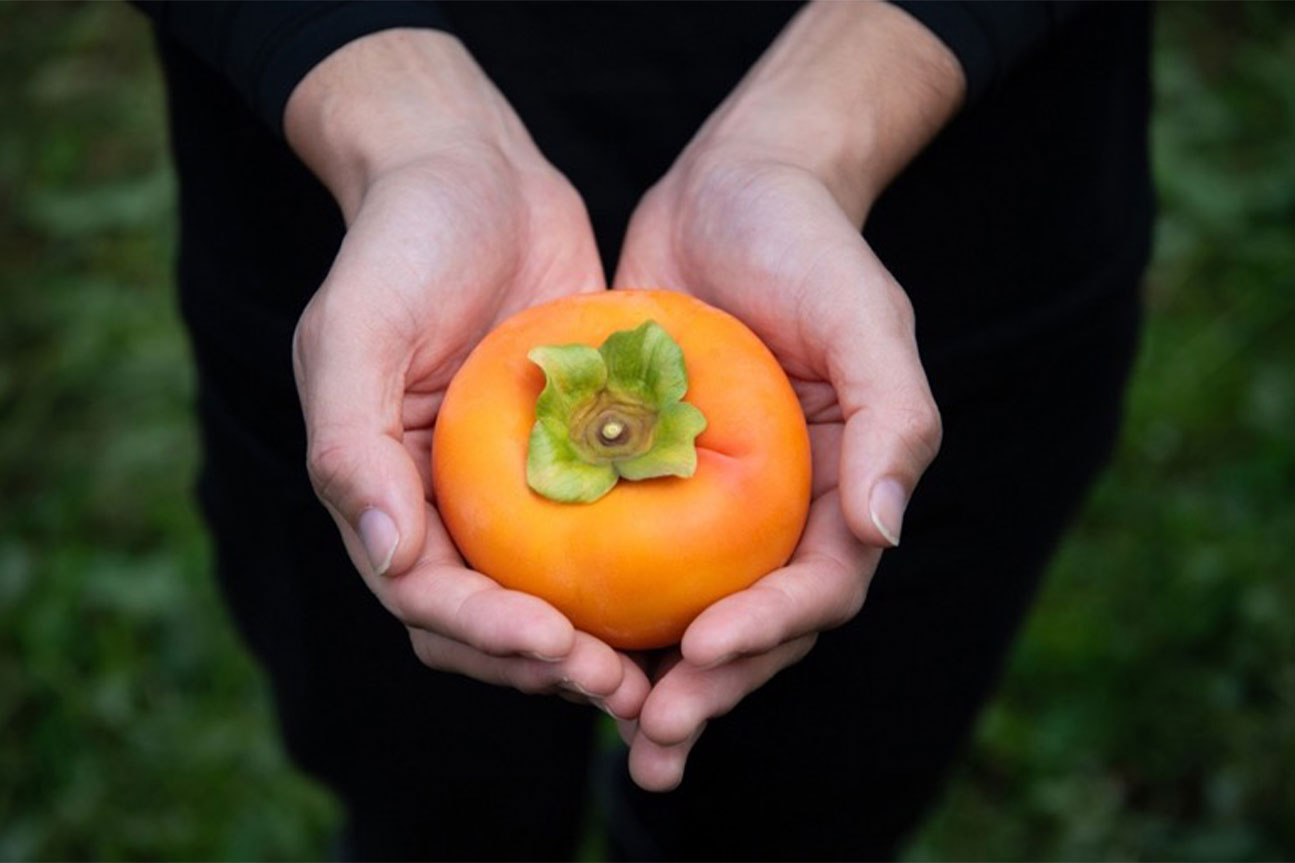
Plump fuyu-gaki soon after harvesting. The fruits of this variety are best eaten fresh.
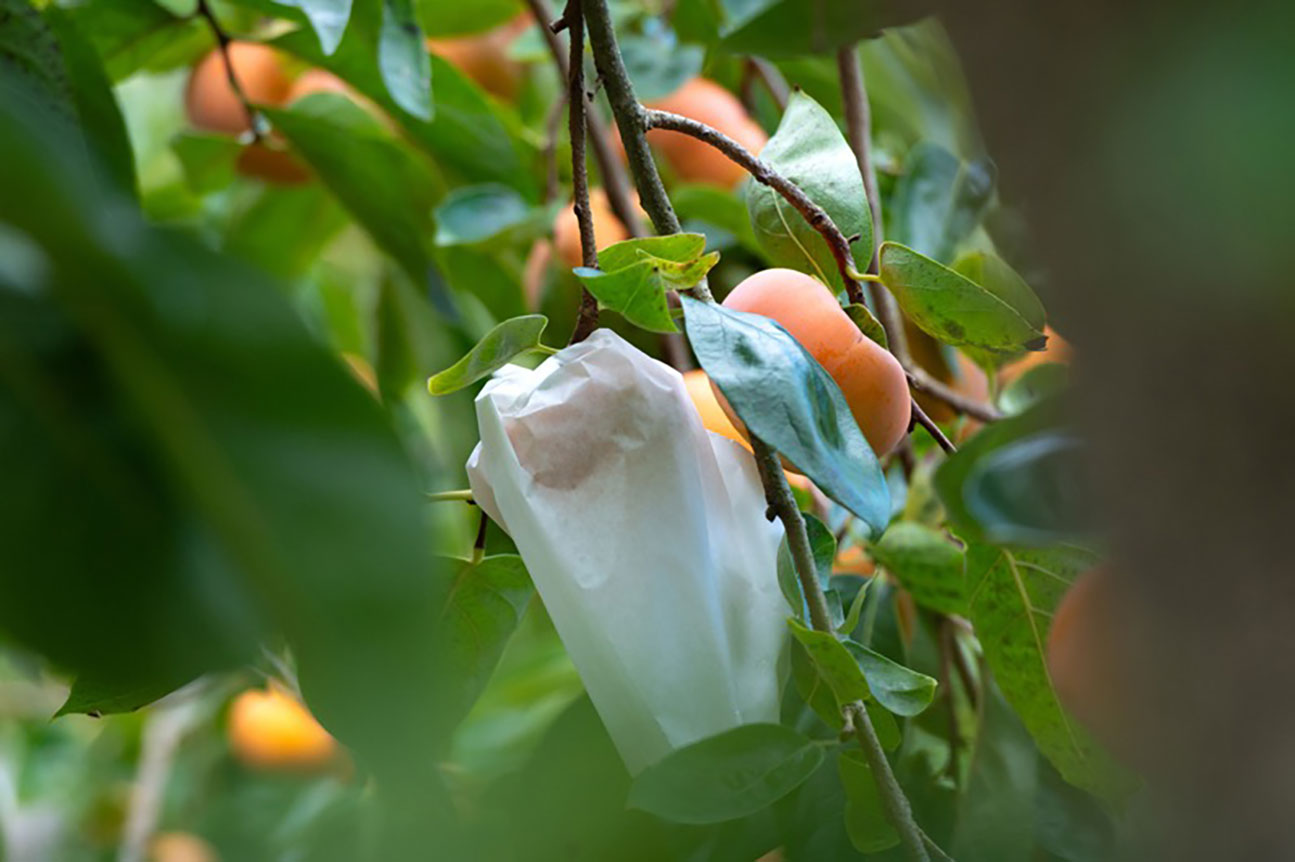
Kaki chosen for their perfection are bagged to prevent blemishes, and marketed as premium kaki for New Year gifts.
Some New and Innovative Menu Items
Kudoyama Manmaru Farm produces dried kaki and persimmon smoothies for sale at their shop in the central area of town. Year-round offerings include kaki-banana smoothies (made with either milk or soy milk), and packages of dried kaki. “I recommend dried kaki for overseas customers,” says Nakatani. “They’re made without added sugar or other additives, leaving a unique texture and the natural flavor. They are easy to carry and perfect as a hiking snack or a light dessert.”
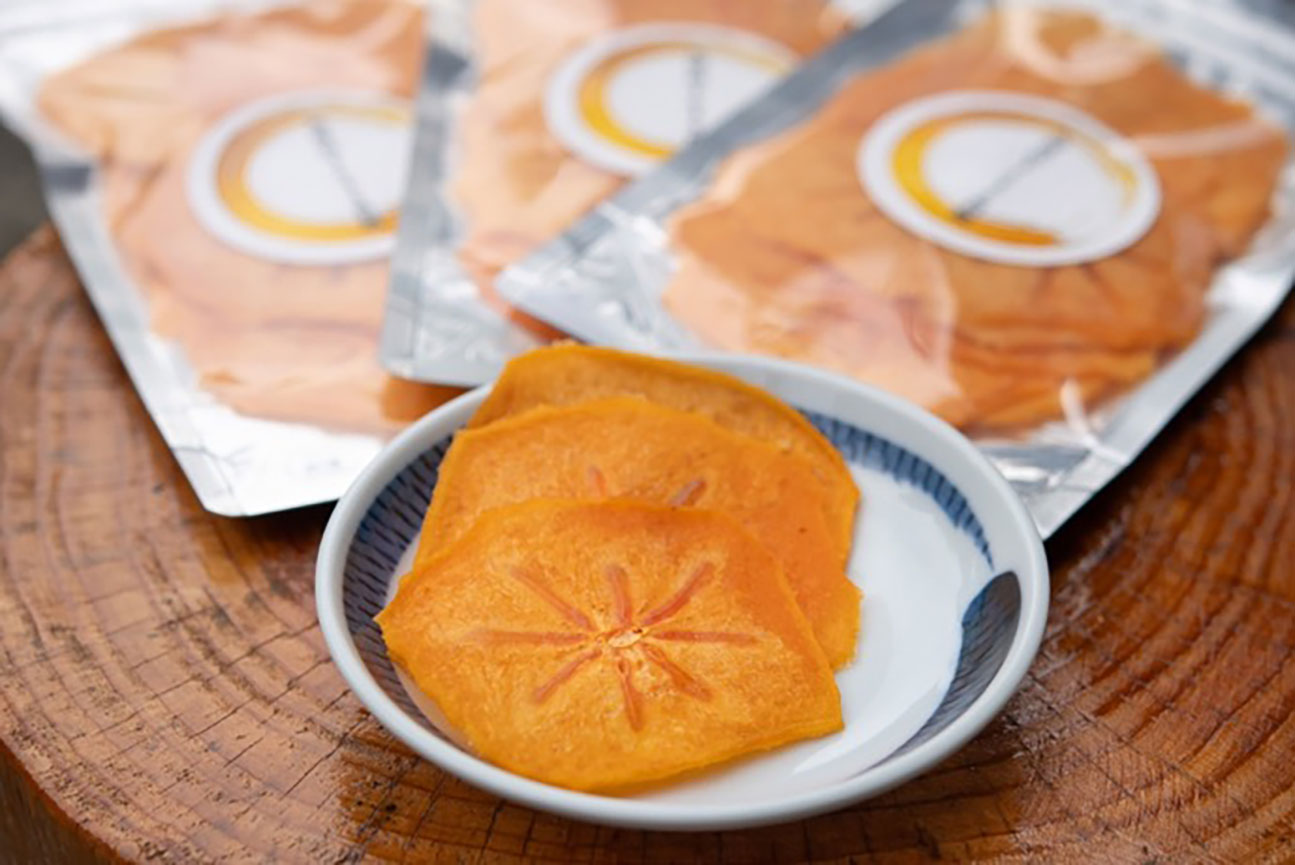
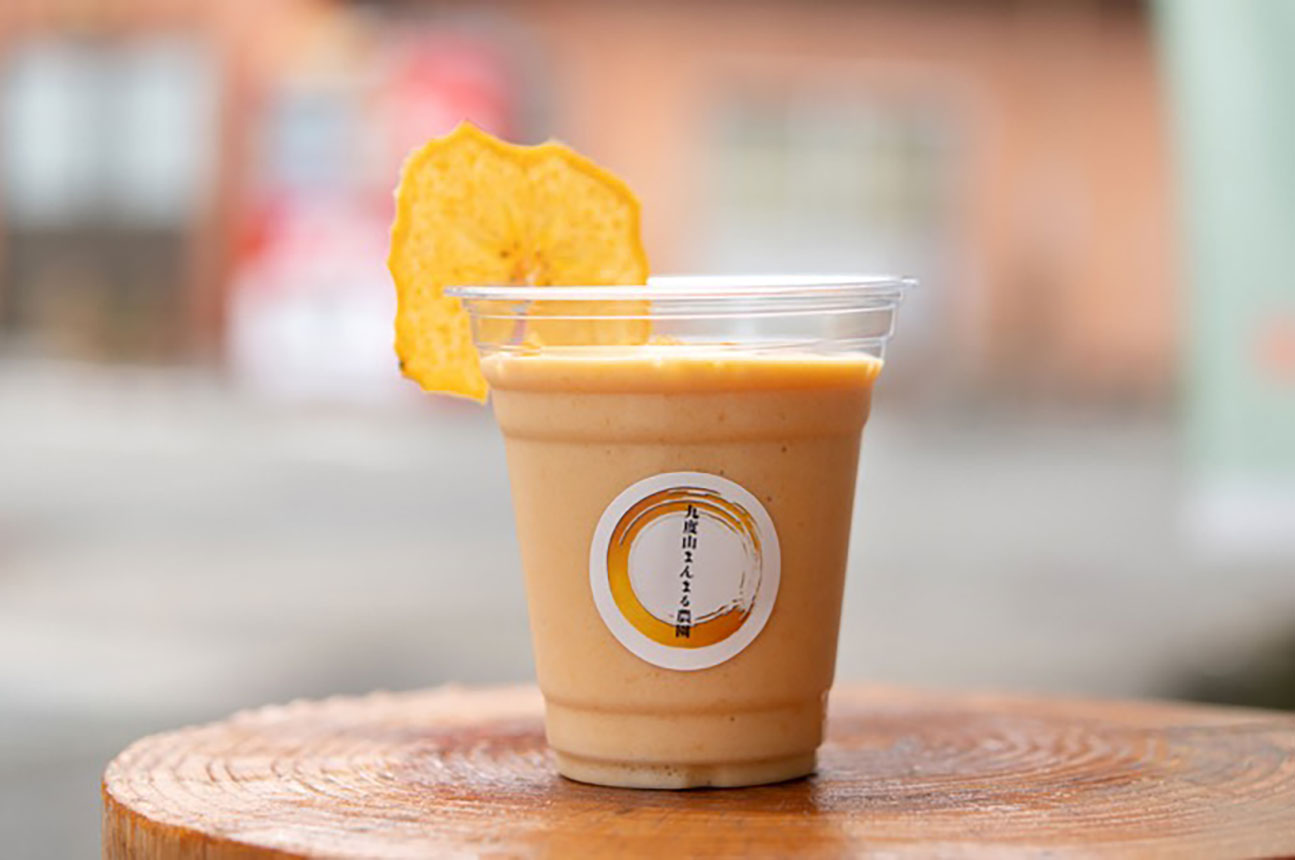
Packages of dried kaki and persimmon smoothies are sold at the Kudoyama Manmaru Farm’s shop, not far from Jison-in temple, a UNESCO World Heritage Site.
Nearby farmers also produce kaki ice cream and jam, with increasingly innovative methods of serving the fruit. At Koyasan, during a special event at Café & Bar Taira, visitors can choose from fresh kaki, kaki pound cake, or anpo-gaki served with either cream cheese or prosciutto. (Anpo gaki are semi-dried astringent kaki with a soft, jelly-like texture.) Nobuhiro Tamura, who runs the café, credits these creative menu ideas to his wife, whose family supplies the fruit. “It’s hard to say which style is more popular with our foreign guests,” he says. “There’s always at least one that they like.”
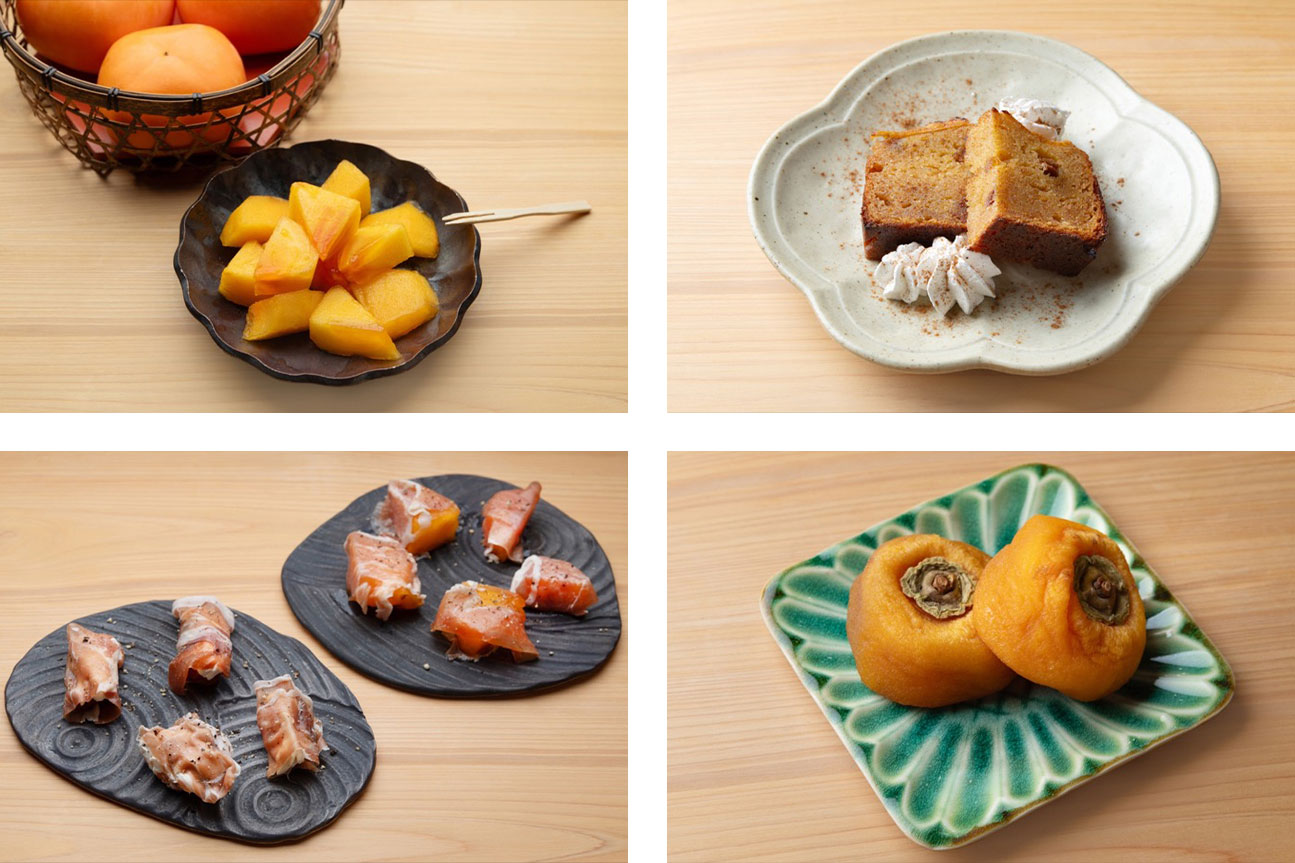
In the town of Koyasan, Café & Bar Taira serves (clockwise, from top left) freshly cut kaki, kaki pound cake, semi-dried anpo gaki, and combinations of semi-dried kaki with prosciutto and cream cheese.
Back on the mountain slopes of the Kudoyama Manmaru Farm, Nakatani is standing next to a sapling much smaller than the surrounding trees. Barely a few meters tall, its thin branches already droop under the weight of several large, glossy kaki. Wakayama kaki farmers, it seems, are not content to rest on tradition, but are looking for new varieties to market. These fruits are “kishu temari” kaki, one of two hybrid varieties being developed in small quantities. “We’ve just begun producing them, so we haven’t started selling them yet,” says Nakatani. “But if you ever come across them, I hope you’ll give them a try.” It’s striking to come across such innovative thinking deep in the forest along the ancient trail to Koyasan.