


The Soul of Japanese Comfort Food: A Sukiyaki Guide
When the weather turns cold in Japan, dining tables across the country are transformed by the arrival of a bubbling hot pot. While there are countless variations of these communal meals, none are quite as internationally beloved or culturally significant as sukiyaki. Featuring premium, marbled beef simmering alongside fresh vegetables in a deeply flavorful broth, it strikes a balance between sweet and savory that few dishes anywhere in the world can match. Whether you are craving the warmth of a traditional Japanese winter dish or looking for a fast, elegant weeknight dinner, learnng how to condense this iconic hot pot experience into a single, satisfying rice bowl opens up one of Japan's most celebrated flavors to the home kitchen.
From Hot Pot to Rice Bowl: A Brief History
To understand the bowl, you must first understand the origins of the pot. Sukiyaki is a traditional Japanese hot pot dish that centers around thinly sliced meat, usually high-quality beef. While many traditional Japanese hot pots rely on the porous clay of a donabe pot to slowly build umami, sukiyaki is distinctly prepared by cooking the ingredients slowly at the table in a shallow iron skillet. The meat is simmered alongside firm tofu, crisp green onions, earthy shiitake and enoki mushrooms, and translucent glass noodles made from konjac.
The defining characteristic of sukiyaki is its rich, noticeably sweet broth, crafted from a precise mixture of soy sauce, sugar, sake, and mirin. Once the ingredients are tender and fully glazed in this sauce, they are traditionally pulled from the pot and dipped into a small bowl of whisked raw egg, which acts as a creamy, mellowing agent that takes the edge off the bold intensity of the beef.
This is also where the choice of beef becomes a matter of chemistry rather than just luxury. Because authentic A5 Wagyu has a fat melting point of around 30°C (86°F), just below body temperature, the rendered sashi fat does not sit on top of the broth as a greasy film. Instead, it emulsifies directly into the warishita broth, coating the tofu, mushrooms, and noodles in a buttery, sweet-and-savory glaze that lean beef simply cannot replicate.
The history of sukiyaki is a fascinating reflection of Japan's own cultural evolution. Due to the influence of Buddhism, eating meat was largely prohibited in Japan for over 1,200 years. It was not until the Meiji era in the late 19th century, when Japan opened its ports to the world, that beef consumption became popular. The earliest iterations were called gyunabe beef pots, and the bold sweetness of the broth served a dual purpose from the very beginning: it masked the unfamiliar scent of meat while creating an approachable flavor profile for a nation that had avoided beef for over a millennium. As the quality of the beef improved, the miso of those early recipes was gradually replaced with the refined sweet soy sauce broth we know today. By the 1960s, sukiyaki had become the go-to celebratory dish for Japanese families and achieved a kind of unlikely global fame when the 1961 Japanese hit "Ue o Muite Aruko" was renamed "Sukiyaki" for Western audiences.
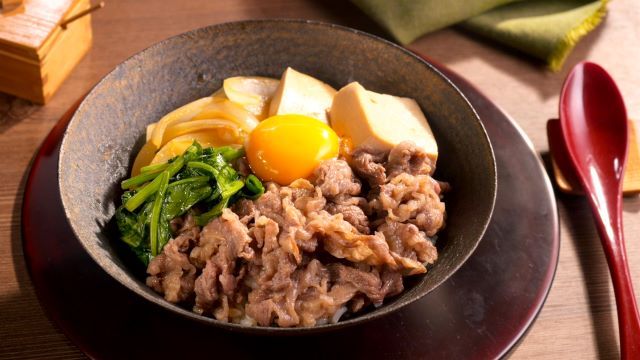
While traditional sukiyaki is an interactive, communal meal cooked gradually over a tabletop stove, a Sukiyaki Bowl is a modern adaptation built for convenience. It uses a standard frying pan to quickly simmer those same iconic flavors, served directly over warm steamed white rice and finished with a rich egg yolk.
Japan's Big Three Beef Dishes, Explained
For diners exploring Japanese cuisine, telling sukiyaki, shabu-shabu and yakiniku apart can be confusing. The differences come down to cooking method, flavor profile, and the sensory payoff each one delivers.
Sukiyaki is the most intense of the three. The meat and vegetables cook directly in a concentrated sweet-and-savory broth of soy sauce and sugar, and the dipping sauce is simply whisked raw egg, which coats the meat and softens the richness. Because the broth reaches around 80°C (176°F), sukiyaki is one of the few preparations that fully unlocks the famous Wagyu Beef Aroma, the distinctive peach and coconut fragrance released at precisely that temperature. There are also two distinct regional styles: in the Eastern Kanto style, the broth is mixed first and everything simmers together, while in the Western Kansai style, the meat is grilled directly in the pan before the sugar and soy sauce are added.
Shabu-shabu offers a different kind of reward. The paper-thin meat is swished briefly through boiling kelp stock, and that short exposure to liquid heat is enough to release the same aromatic compounds without the weight of sugar or soy. The result is a cleaner, more delicate expression of the Wagyu Beef Aroma, where the fragrance comes through unobstructed. Because the stock itself is unseasoned, the flavor comes entirely from dipping the cooked meat into tangy citrus ponzu or creamy sesame sauce at the table.
Yakiniku translates simply as "grilled meat." Unlike the other two, there is no broth involved. The beef cooks over direct dry heat, and while the high-temperature searing produces its own rich caramelization, the fat renders off rather than integrating into the dish. The sensory payoff here is in the crust and the char rather than the aroma, and the meat is finished with a thick savory sauce called tare.
Warishita, Wagyu, Rice: Getting Each One Right
Capturing the authentic flavor of traditional sukiyaki in a single bowl comes down to three things done well.
First, the beef. Well-marbled, paper-thin slices are non-negotiable. The meat needs to be cut thin enough that the sashi fat melts the moment it contacts the hot broth, releasing its fat instantly into the broth rather than rendering slowly over a long cook.
Second, the warishita broth. The ratio matters: soy sauce for saltiness, sugar for caramel sweetness, and sake and mirin for gloss and acidity. The sake is an indispensable part of this equation. Sake's alcohol penetrates the beef fibers to tenderize them on contact, while its high concentration of amino acids acts as a flavor bridge between the savory soy and the sweet sugar, drawing the two together into a broth that tastes more cohesive and complete than either element could produce alone. When the Wagyu fat emulsifies into this simmering base, the result is a glaze that coats every ingredient in the pan.
Finally, the rice. Cooking your rice in a traditional Japanese donabe pot takes the bowl from good to exceptional. High-quality donabe pots are crafted from clay sourced from the Iga region, rich in fossilized microorganisms. This porous material heats slowly, developing umami from within the grain, and the equally slow cooling draws out a natural sweetness in the rice. Crucially, that same porous texture allows the grains to absorb the rendered Wagyu fat from the broth without turning heavy or mushy, providing the ideal foundation for everything above it.
The Recipe: Frying-Pan Sukiyaki
A streamlined, savory take on the classic that’s less sweet and ready in minutes.
Recipe
Making sukiyaki easily using a frying pan.
It is less sweet than regular sukiyaki.
 Cooking time
Approx. 20 minutes
Ingredient 2 servings
- Wagyu (thinly sliced) 200g
- Momen tofu (firm tofu) 100g
- Onion 100g
- Spinach 50g
- A Soy sauce 25ml
- Mirin 25ml
- Sake 20ml
- Sugar 3/4 tsp.
- Water 60ml
- Cooked rice 300g
- Egg yolk 2U
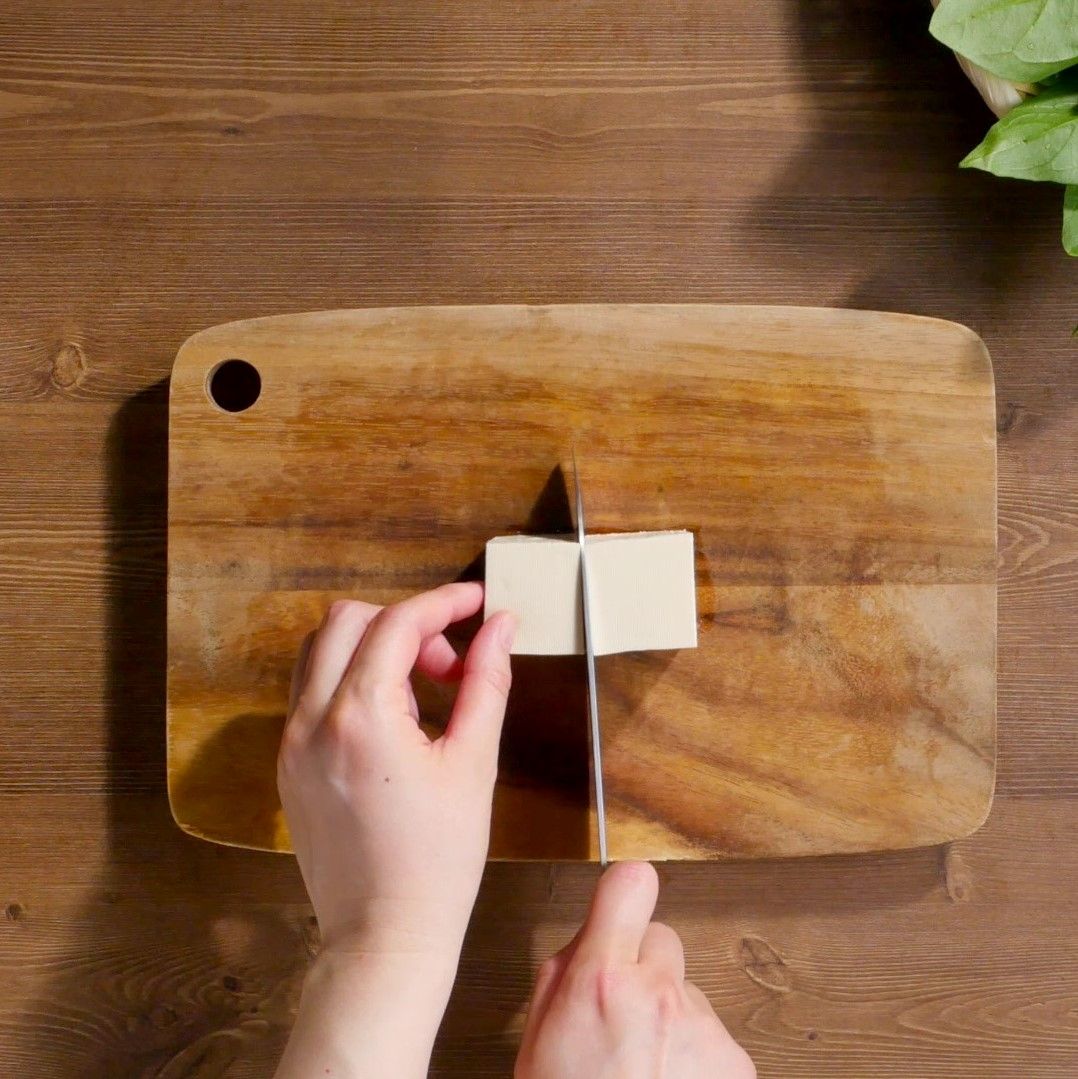
Cut the tofu in an eatable size. (in about eighth)
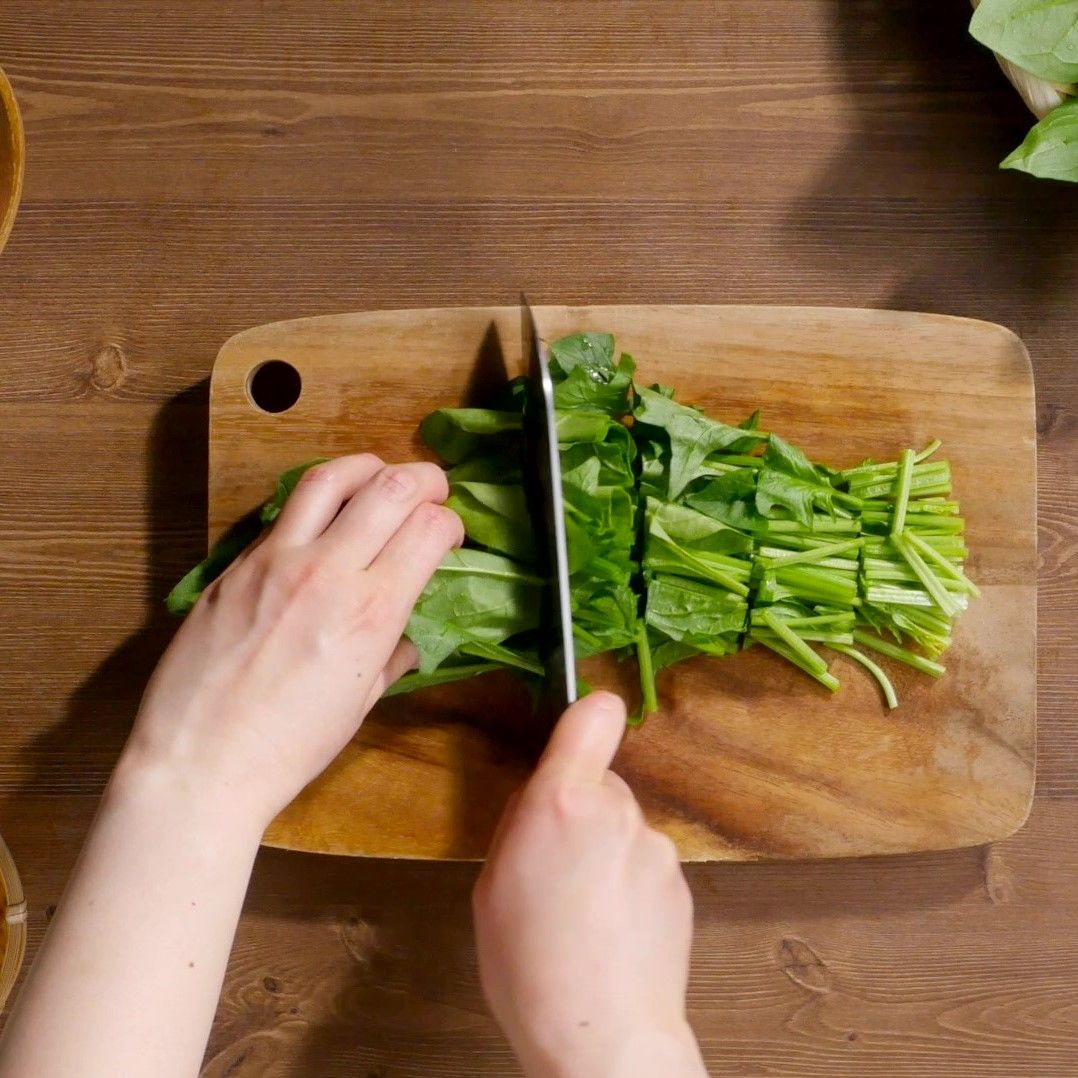
Cut the spinach in 5cm length
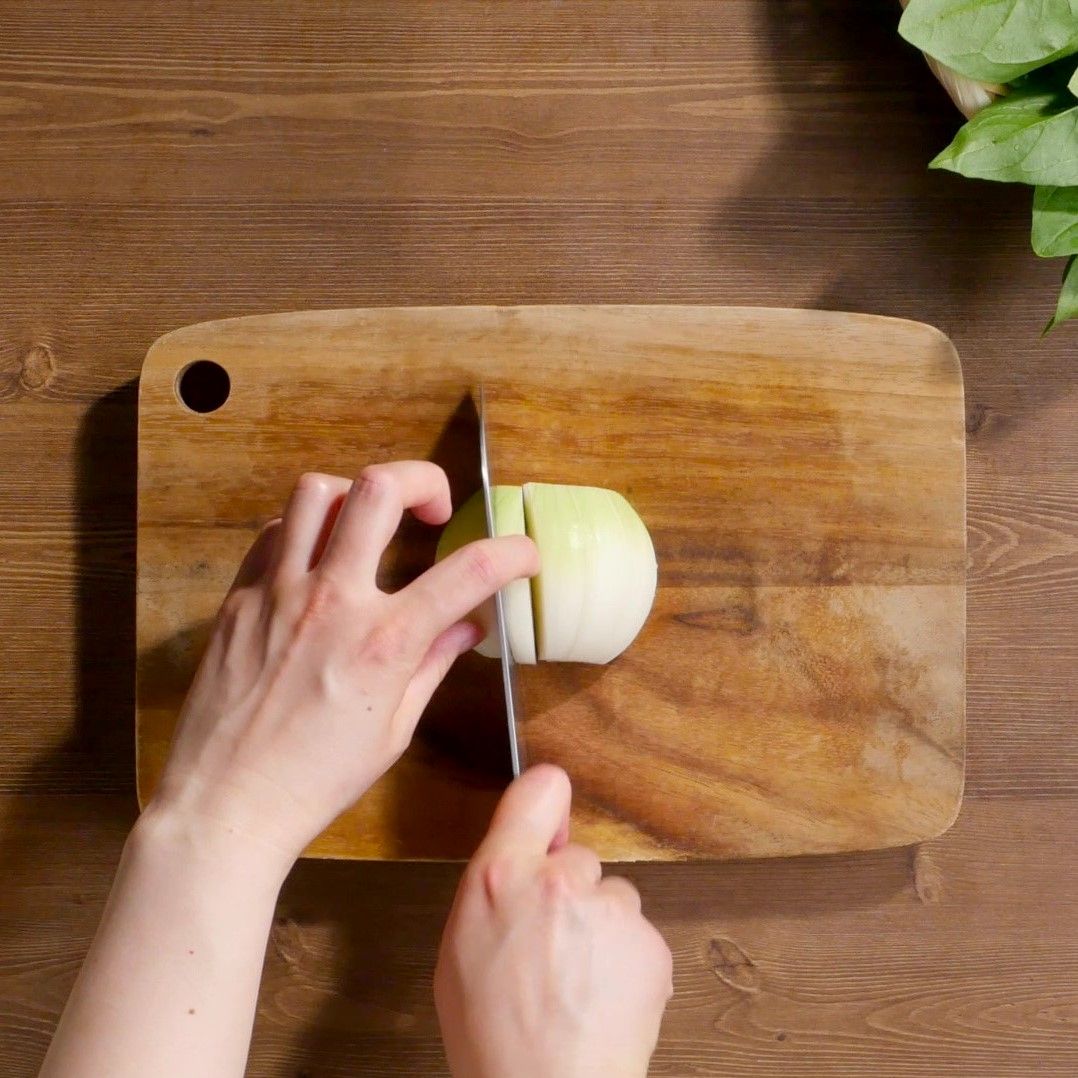
Cut the onions in half slices.
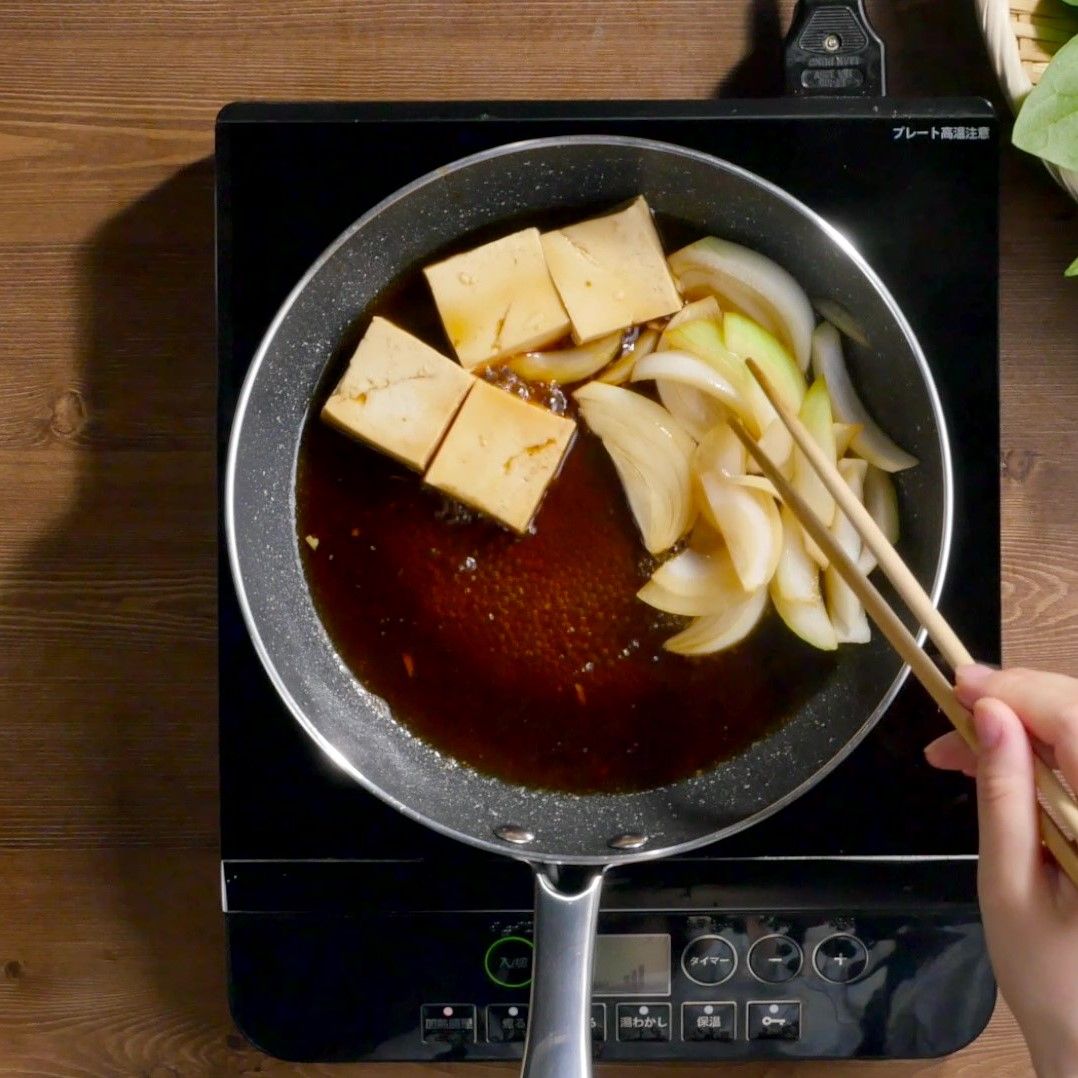
Put the A ingredients in a frying pan and heat. Once boiled, put tofu and onion, cook until the onion softens. (tip: Don't move the ingredients so it is easier when you serve.)
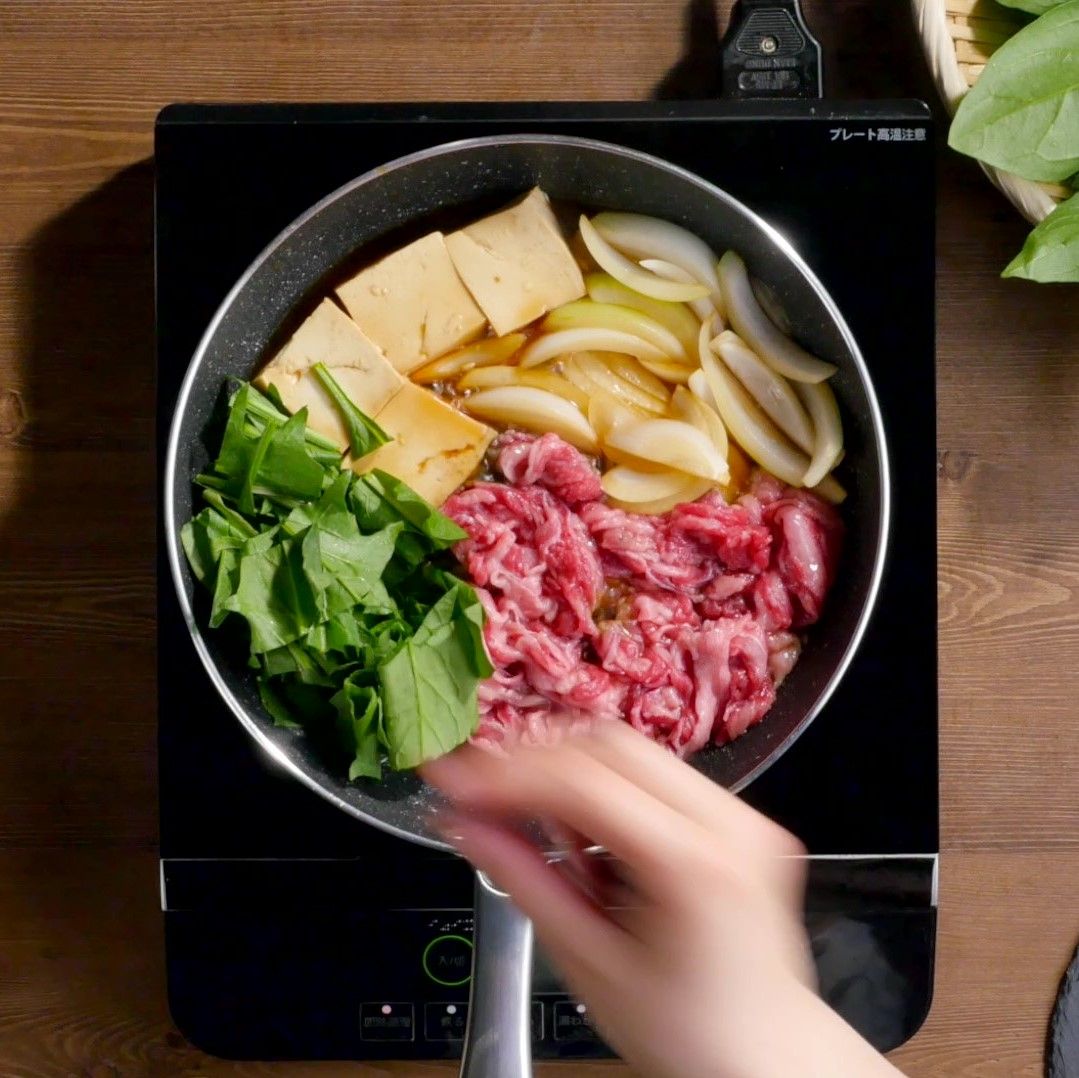
Cook until the sauce thickens to your favored taste, add wagyu and spinach to give it a quick cook
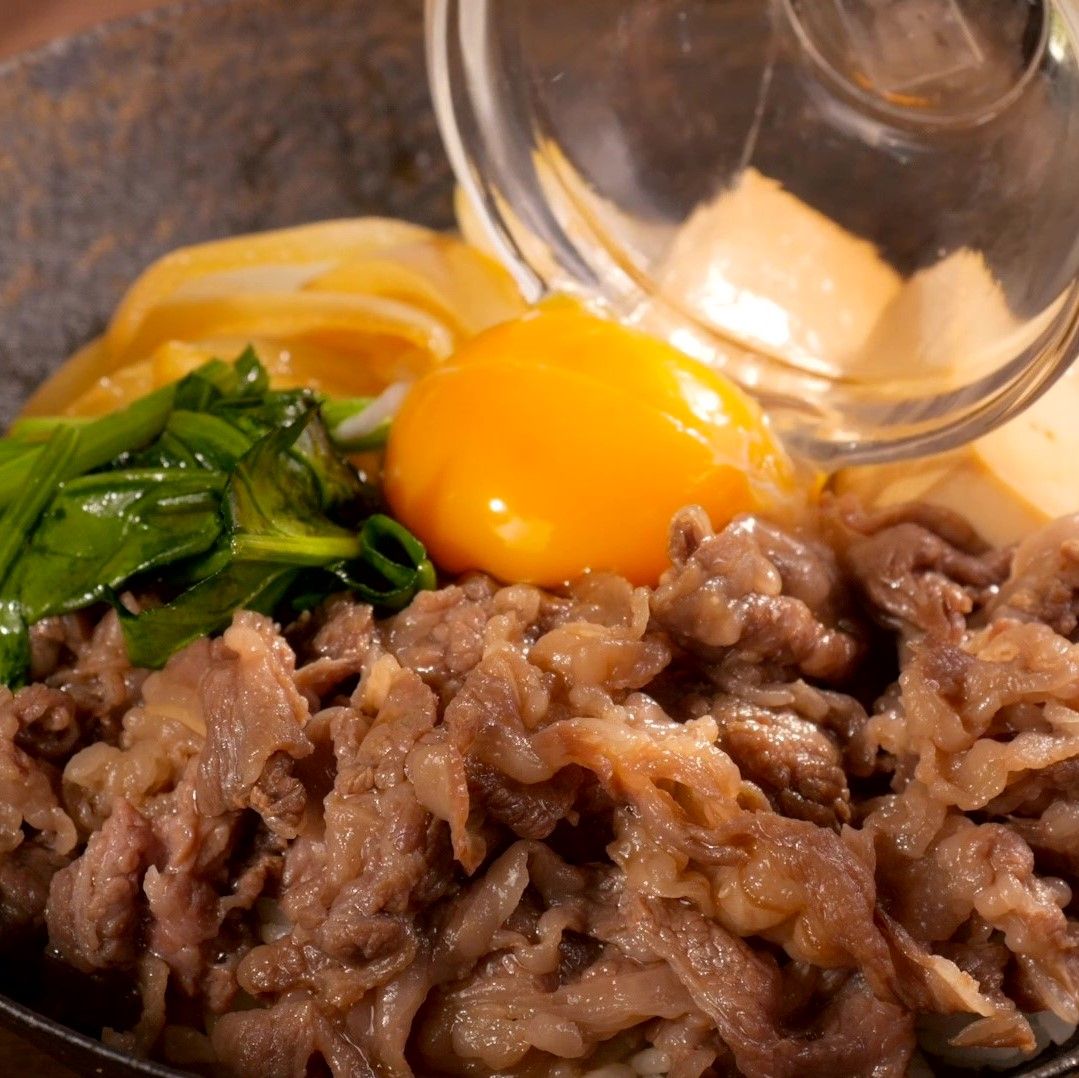
Put rice in a bowl and serve the suki-yaki, pour the sauce evenly and place egg yolk in the middle.

This sentence is a temporary sentence. It is a dummy.This sentence is a temporary sentence. It is a dummy.This sentence is a temporary sentence. It is a dummy.This sentence is a temporary sentence. It is a dummy.This sentence is a temporary sentence. It is a dummy.This sentence is a temporary sentence. It is a dummy